
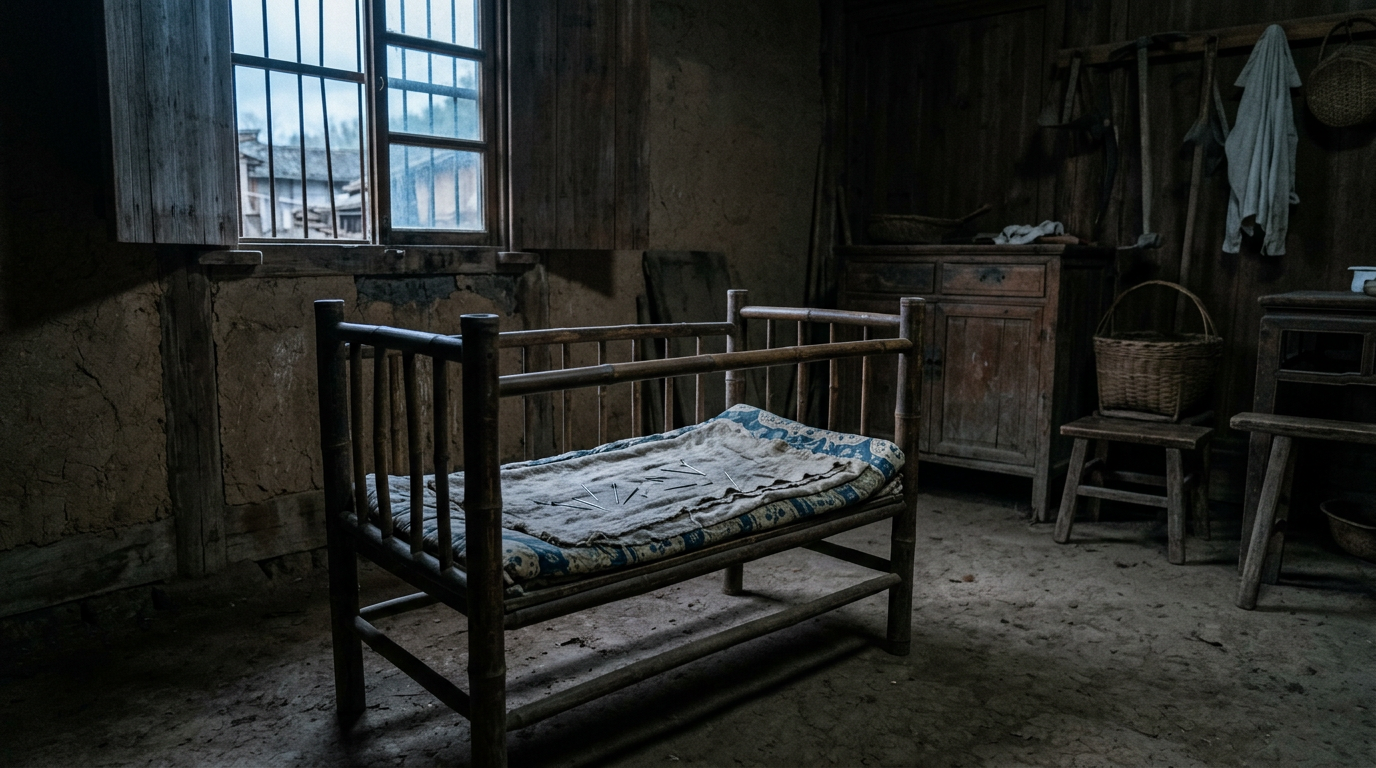

A disturbing online account describes an alleged practice in which girls were harmed because families wanted a male child. The story is difficult to verify independently and should be treated cautiously, not as evidence that the practice is widespread.
(Staff: China / Society & Children’s Rights)
A post circulating on social media tells the story of a girl given the name 招弟 (Zhaodi), commonly understood as a wish for a younger brother or a boy. The account claims that needles began disappearing from the household after her birth. These details come from an online testimony; the article does not identify independently verifiable case records.
Son preference and superstition
The account alleges that in some isolated communities, people believed harming a girl could somehow ensure that the next child would be male. Such a claim is extraordinary and needs reliable documentation before it can be presented as an established custom. Son preference and discrimination against girls have been documented in different contexts, but that broader issue does not by itself verify this particular allegation.
The testimony also links the story to China’s former one-child policy. The policy and its exceptions changed over time and differed by region and circumstances. It would be misleading to suggest that the policy simply allowed a second child only when the first child died; rural families in some circumstances could have another child, including when the first was a girl.
Claims of investigations and convictions
The online post says that reported cases were investigated and those responsible were punished, and that some incidents may never reach the authorities. However, it provides no names, dates, locations or official records in the text presented here. Those claims therefore cannot be independently confirmed from the testimony alone.
Why careful reporting matters
Violence against children and discrimination based on sex deserve serious attention. At the same time, responsible journalism must distinguish verified cases from an account circulating online, avoid generalising about rural Chinese communities, and seek corroboration from reliable reporting or official records.
Conclusion
The story raises serious questions about son preference, superstition and child protection. Its specific allegations should be independently verified before they are treated as established fact. Protecting children requires both confronting abuse and reporting it accurately.





Leave a Reply