
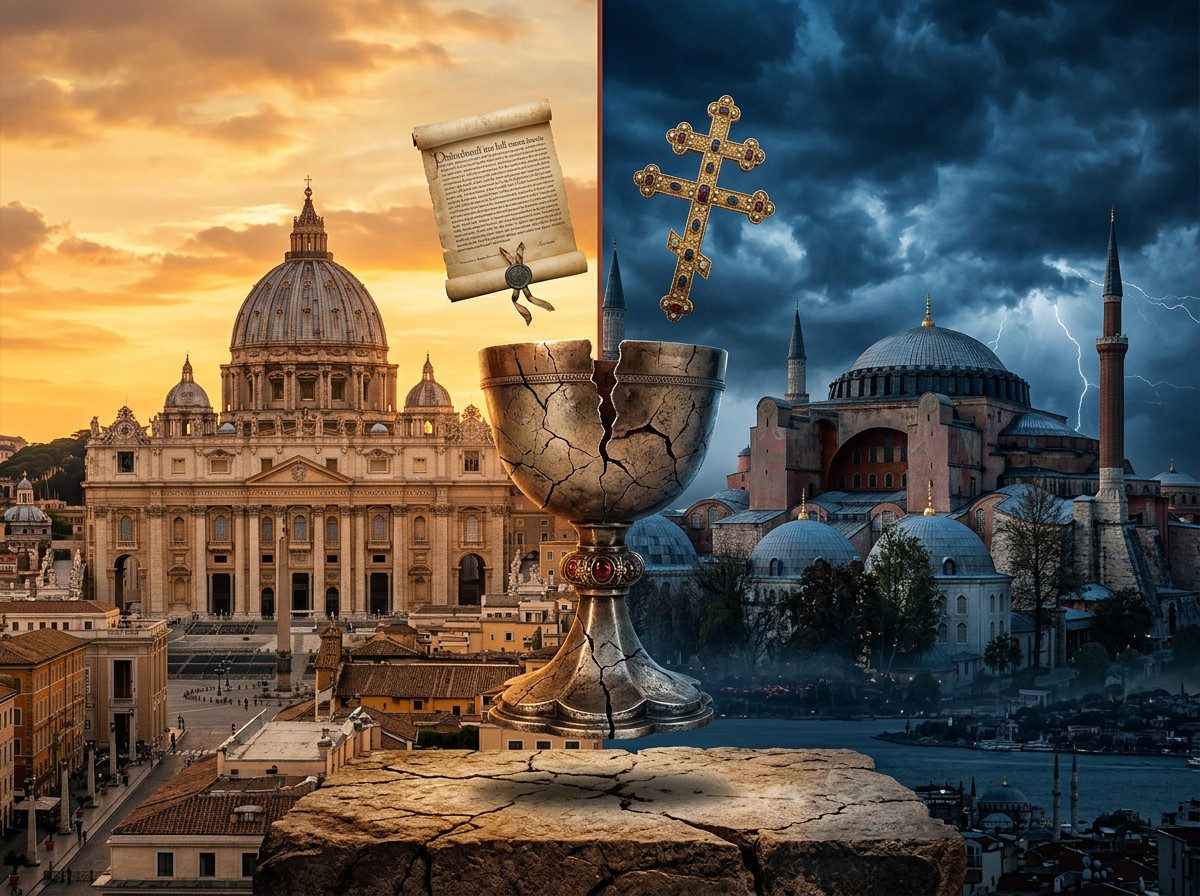

In July 1054, Cardinal Humbert of Silva Candida placed a document of excommunication on the altar of Hagia Sophia in Constantinople, targeting Patriarch Michael Cerularius. The confrontation became an enduring symbol of the division between Western and Eastern Christianity. The separation, however, was not created in a single day.
(Staff: Vatican & Constantinople / History & Religion)
The Great Schism is commonly dated to 1054, but relations between Rome and Constantinople had been deteriorating for centuries. Differences in language, political circumstances, church authority and theology gradually widened the distance between the two centres of Christianity.
Two traditions growing apart
- Language: Latin predominated in the West and Greek in the East, making communication and theological exchange more difficult.
- Authority: Rome increasingly asserted the pope’s universal primacy, while Eastern church leaders emphasised the shared authority of bishops and patriarchs and the importance of councils.
- Theology: The Filioque controversy concerned the Western addition “and the Son” to the Creed’s wording on the procession of the Holy Spirit.
- Politics: Rival imperial and regional interests further strained relations.
What happened in 1054?
A delegation sent by Pope Leo IX and led by Cardinal Humbert arrived in Constantinople amid tense negotiations. On 16 July, Humbert placed a sentence of excommunication against Cerularius and two other people on the altar of Hagia Sophia. The patriarch and a synod later responded by condemning the papal legates. These acts targeted individuals; they were not a formal, definitive excommunication of the entire Western or Eastern Church. Pope Leo IX had also died before the legates’ action, raising questions about its canonical authority.
The wound of 1204
The Fourth Crusade deepened the estrangement dramatically. In 1204, Western crusaders captured and plundered Constantinople, desecrating churches and causing immense damage. The attack left a lasting memory of betrayal in the Byzantine world and made reconciliation much harder.
Attempts at reconciliation
Church leaders attempted reunion at the Councils of Lyon in 1274 and Ferrara-Florence in 1438–1445, but their agreements did not achieve lasting acceptance among the faithful. On 7 December 1965, Pope Paul VI and Ecumenical Patriarch Athenagoras I issued a joint declaration removing the mutual excommunications of 1054 from the memory and life of the Churches. This was a major gesture of reconciliation, not the restoration of full ecclesial or Eucharistic communion.
Why it still matters
The Great Schism reflects the interaction of theology, political power, competing ideas of authority and cultural difference. Catholic and Orthodox Churches have since developed distinct traditions and institutions, while continuing dialogue and seeking closer relations.
Conclusion
The events of 1054 became a landmark in a much longer process of separation. The confrontation at Hagia Sophia was a dramatic episode, but centuries of mistrust and later events—especially the sack of Constantinople in 1204—gave the division its enduring force. The 1965 declaration helped heal historical memories, while full communion remains a separate and unfinished goal.


Leave a Reply