
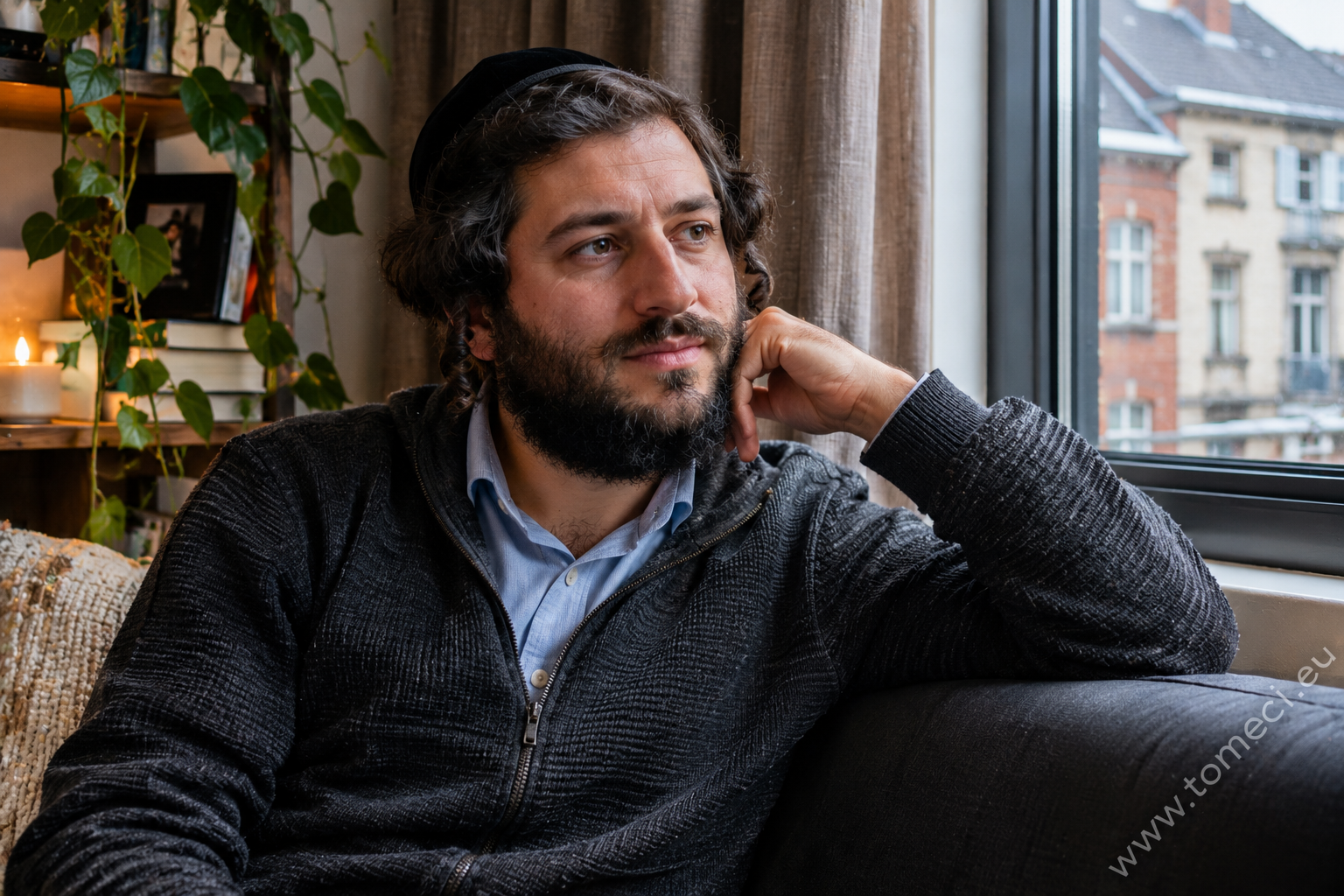
At 36, Avi Feldman tells his story in a book titled “Ex-Ultra”. He grew up in a very strict religious community where, according to his testimony, his childhood was marked by violence, severe discipline and numerous prohibitions. He managed to leave, but says the effects of that upbringing continue to influence his life.

Avi Feldman was 12 when his mother told him he did not deserve to celebrate his birthday. He received no cake, gifts or greeting cards. “I was bad, I came to believe that, so I did not deserve to exist,” he says.
Now 36, he lives in Berchem, near Antwerp, and is publishing his autobiography, titled “Ex-Ultra”. The book describes his childhood and his experience in an ultra-Orthodox Jewish community in Antwerp, as well as the difficult path towards separating himself from the environment in which he grew up.
The interview with Het Laatste Nieuws offers a personal account of a world shaped by strict religious rules, limited general education and intense pressure from the community.
A childhood dominated by rules and discipline
Avi was born and raised near Antwerp Central Station and the city’s diamond district. His family belonged to the Ger Hasidic group, a branch of ultra-Orthodox Haredi Judaism known for strict observance of religious laws and rejection of many changes in modern society.
As a child, he was known as Abraham Mordechai. His father worked in the diamond trade, and the family was large: Avi grew up with ten siblings.
He describes the atmosphere at home as resembling a barracks. They had food, clothes and a large home, but affection and the expression of emotions were almost entirely absent.
According to his testimony, his father sometimes beat him for several minutes when the children resisted or contradicted him. Avi says that until he was 28, no one in his family had ever told him that he was loved.
Religious education and violence at school
The education system Avi describes was strongly focused on religion. During the first years of school, pupils had about an hour and a half a day of general subjects such as geography, history and Dutch. The rest of the timetable was devoted to religious study.
After the age of 13, boys no longer received general education in Dutch, according to his account. The focus was almost exclusively on studying the Talmud.
Avi says he was physically assaulted both at home and at school. He describes a teacher who hit pupils, squeezed their fingers and then struck them with a stick. In his view, violence and abuse were more common among boys than girls.
These experiences are the book author’s personal account and should not be confused with a universal description of all ultra-Orthodox Jewish families or institutions.
London, Jerusalem and the first doubts
At around 15, Avi was sent to an ultra-Orthodox boarding school in London. Although the programme was almost entirely religious, he says those two years were better than life at home because he had friends and a degree of independence.
He later went to Jerusalem to continue his religious studies. There, using a laptop he kept hidden, he began discovering information about the world beyond the community.
At 22, he says, he began to understand his own questions about sexuality and relationships more clearly. The religious rules he had grown up with prohibited masturbation and physical contact between men and women outside the purpose of procreation.
His doubts grew stronger. He returned to Antwerp but no longer felt integrated into the community in which he had grown up.
Leaving for Berlin: the beginning of another life
At 28, he decided to leave for good. One night, he secretly left the family home and took a bus to Berlin, where he was hosted by another Jewish man who had also left the ultra-Orthodox community.
About a month later, he cut off his traditional sidelocks (payot) and shaved his beard. For him, the gesture symbolised the beginning of a new identity.
He discovered the freedom to go into clubs, eat food that did not follow kosher rules and make everyday decisions for himself. His first culinary experience of this kind was a simple bratwurst bought in Germany.
But external freedom did not mean that his internal constraints disappeared immediately.
“My mind is still a prisoner”
Avi says that although he physically left the community, the effects of the upbringing he received continue to follow him.
One of the most difficult areas is his relationship with women. He says that when attraction is mutual, thoughts and prohibitions internalised during childhood leave him feeling blocked.
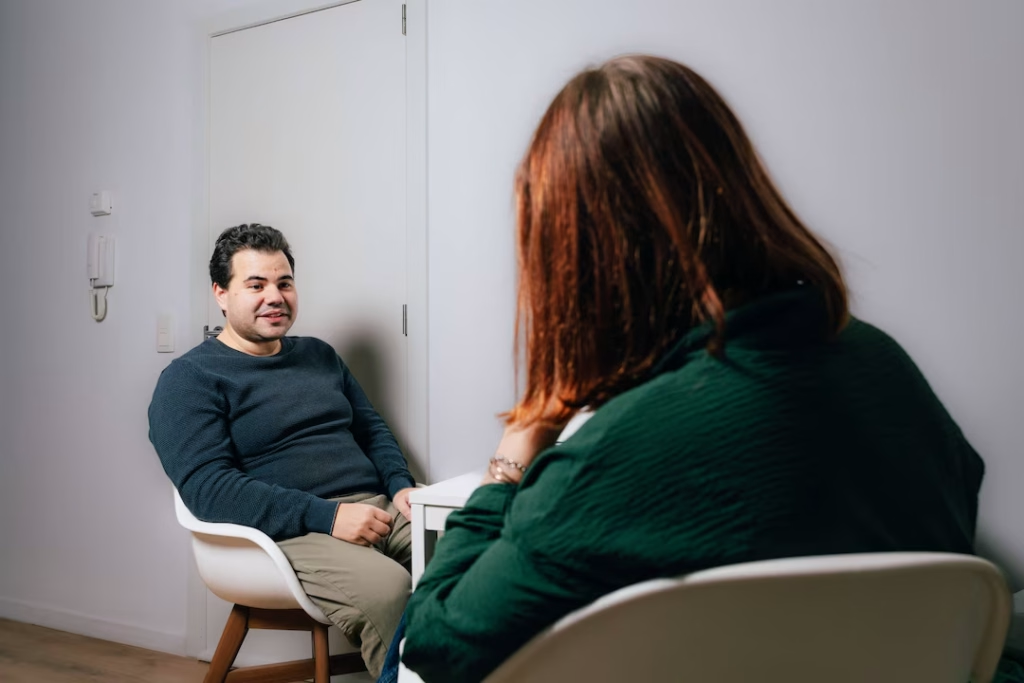
He returned to Antwerp to receive psychiatric help and tried several forms of treatment, both conventional and alternative. He says he has still not managed to overcome all the difficulties.
Nevertheless, he does not speak about the community he left only in negative terms. He acknowledges that there is solidarity, financial assistance for members in need and a strong sense of belonging.
It is precisely this combination of community support and severe restrictions that makes separation so complicated.
A book about freedom and reclaiming one’s own past
Avi has two sisters who have also left the community. His relationship with his parents remains complicated, however. He says a child’s departure can be seen as a source of shame for the whole family, but he also tries to understand that his parents were shaped by the same system.
By publishing “Ex-Ultra”, he wants not only to tell his experiences but also to regain control over his own story.
“It is important that things are not hidden,” he says, explaining why he decided to speak publicly.

Avi Feldman’s story opens a difficult discussion about individual freedom, education, violence and the pressure of belonging to a closed community.
Leaving the environment in which you grew up does not always mean you have freed yourself from everything that environment left inside you. For Avi, that is the struggle that continues even after leaving.


Leave a Reply