
The Vlaams Belang party is criticising the reintegration programme supported by Minister for Asylum and Migration Anneleen Van Bossuyt. In the first ten months of 2026, only 141 Syrian nationals voluntarily returned to their country of origin, compared with 219 during the whole of the previous year.

The Belgian government’s programme to encourage the voluntary return of Syrian nationals has come under opposition criticism after new statistics showed that the number of returns had not increased at the expected rate.
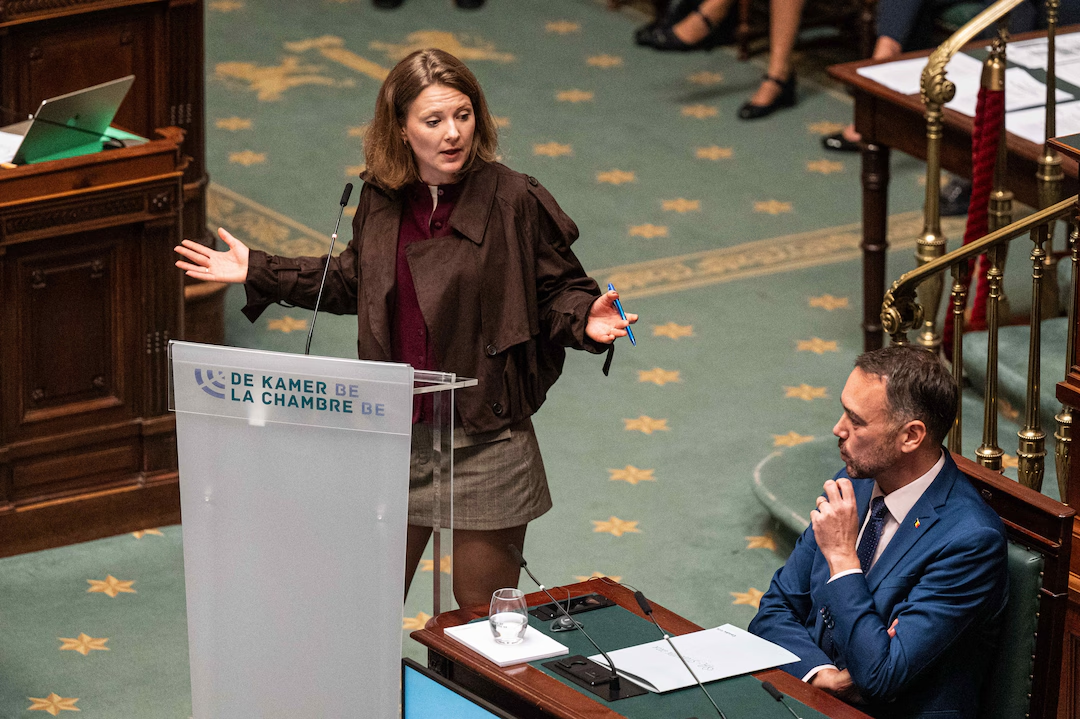
Federal MP Francesca Van Belleghem, of the Vlaams Belang party, raised the issue on Thursday, 26 November, during question time in the Chamber of Representatives. She believes that increasing financial assistance for reintegration has not produced the results promised by the government.
141 returns in ten months
According to Fedasil figures cited in the Belga article, 141 Syrians voluntarily returned to their country of origin in the first ten months of 2026. The total for the whole of 2025 was 219.
When adjusted for the length of the periods, the figures amount to an average of around 14 returns per month in 2026, compared with more than 18 per month in 2025. The comparison suggests a slower rate of returns, although 2026 had not yet come to an end.
Van Belleghem criticised the effectiveness of the measures and called on the government to pay more attention to forced returns, rather than focusing only on financial incentives for voluntary departure.
Support of up to €5,000
At the beginning of the year, Minister for Asylum and Migration Anneleen Van Bossuyt, of the N-VA, announced a strengthened support programme for Syrians who choose to return.
Under the scheme presented by the ministry, people whose asylum applications are still being processed may receive reintegration assistance of up to €5,000, depending on when they return. Support of €3,000 is provided for people without a regular residence status.
It is important to clarify that these amounts are not automatically paid out in cash. The support is intended to cover specific expenses in the country of origin, such as housing, vocational training, medical services or starting a business. <Cite refs={[“turn141235view0″,”turn141235view1”]}/>
The minister points to difficulties with return procedures
In her response, Anneleen Van Bossuyt stressed that between 1 January and the end of October 2026, a total of 2,315 foreign nationals had voluntarily returned from Belgium to their countries of origin. Syria ranked third among the countries of origin.
The minister explained that neighbouring countries also face operational difficulties in organising forced returns.
She also pointed out that a negative decision on a person’s right of residence can be challenged. In such cases, removal from Belgian territory can take place only after the Council for Alien Law Litigation (RVV) has upheld the negative decision.
According to the minister, no relevant ruling had been issued in the proceedings mentioned by the time of her statement, contributing to delays in returns.
A debate that remains open
The dispute between the government and Vlaams Belang highlights two aspects of Belgian migration policy: the effectiveness of incentives for voluntary return and the legal and administrative difficulties involved in forced returns.
The figures show that the rate of voluntary returns by Syrians was lower in the first ten months of 2026 than the monthly average for 2025. It remains to be seen whether the situation will change by the end of the year and whether the reintegration measures will produce the results the government is seeking.



Leave a Reply