
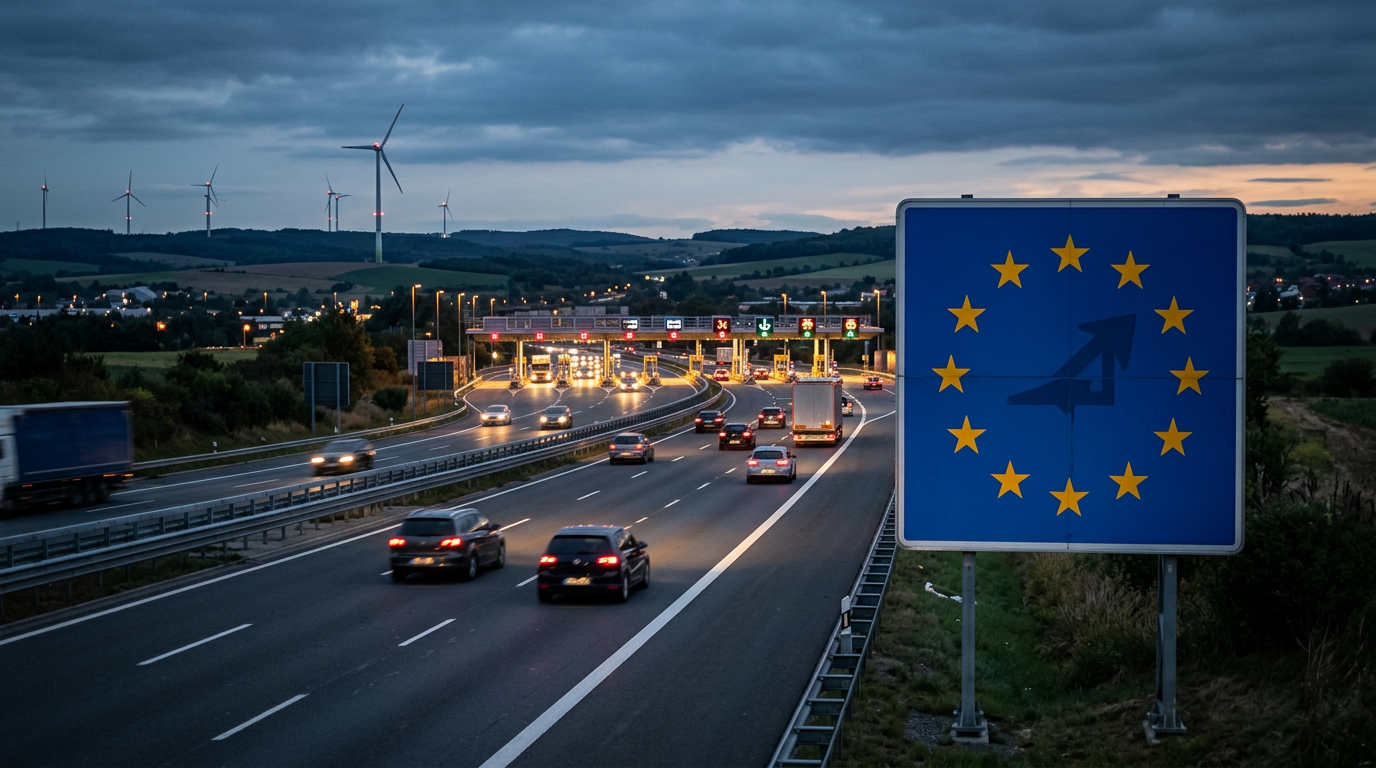

From 1 January 2027, Belgium is introducing a major road-tax reform, including a daily vignette of about €9 for motorway use. But drivers using Antwerp’s famous Liefkenshoek Tunnel will still have to pay its separate toll, potentially making this route one of Europe’s most expensive.
(Editorial team: Belgium / Economy & Mobility)
The European ideal of free movement is gradually colliding with the fiscal reality of states desperately seeking new budget revenue. After years of debate, Belgium has decided to take a step many drivers considered unthinkable: introducing a road-use vignette. But, as so often in countries with complex administrations, the devil is in the details. And this time, the detail is a tunnel.
The €9-a-day vignette: the new road-charging system
According to the official announcement, drivers wishing to use Belgium’s road network will have to pay from 1 January 2027, although the exact date and final details may still change. The proposed system is no longer a simple annual sticker for the windscreen, but a digital scheme based on the principle of “pay as you use”.
The estimated cost for a car is around €9 per day. Commuters and frequent travellers will be able to choose monthly or annual subscriptions that significantly reduce the daily cost. The government says its aim is to shift the tax burden from car owners, through vehicle registration charges, to actual road users, while encouraging public transport.
The Antwerp trap: the Liefkenshoek Tunnel
So far, this looks like a standard European strategy. The major problem arises when infrastructure that already has its own toll is added to the equation. The clearest example is the Liefkenshoek Tunnel, located in the Port of Antwerp.
The tunnel, part of the R2 ring road, was built with private funding and operates under a public-private partnership. Its use has therefore been subject to a separate toll for years. Rates vary by vehicle type, but a car pays around €6 for a single passage.
The authorities have confirmed that the new national vignette will not abolish the tunnel’s local toll. In other words, a driver using the Liefkenshoek Tunnel will pay “a toll on top of a toll”: €9 for the right to use the road network (the vignette), plus the tunnel fee.
Impact on drivers and transport operators
This overlap of charges directly affects household and business budgets. For a Romanian tourist driving through Belgium on the way to Great Britain or France, this route becomes particularly unattractive. For the logistics sector, which relies on trucks passing through the Port of Antwerp every day, costs could rise substantially.
Although the Belgian government promises a “smart” system and discounts for daily road users, the outlook for the average driver remains bleak. From 2027, driving in Belgium could require much more careful financial planning.
Conclusion
Belgium is making a bold but risky bet. The €9-a-day vignette is intended to support public finances, but combined with existing charges on critical infrastructure such as port tunnels, it could create a sense of fiscal unfairness. Western Europe has long ceased to be a paradise of free roads. Soon, every kilometre driven in Belgium may come with a carefully calculated cost, tunnel or no tunnel. It remains to be seen whether drivers’ protests will change this financial equation or whether everyone will simply have to pay the bill.




Leave a Reply