
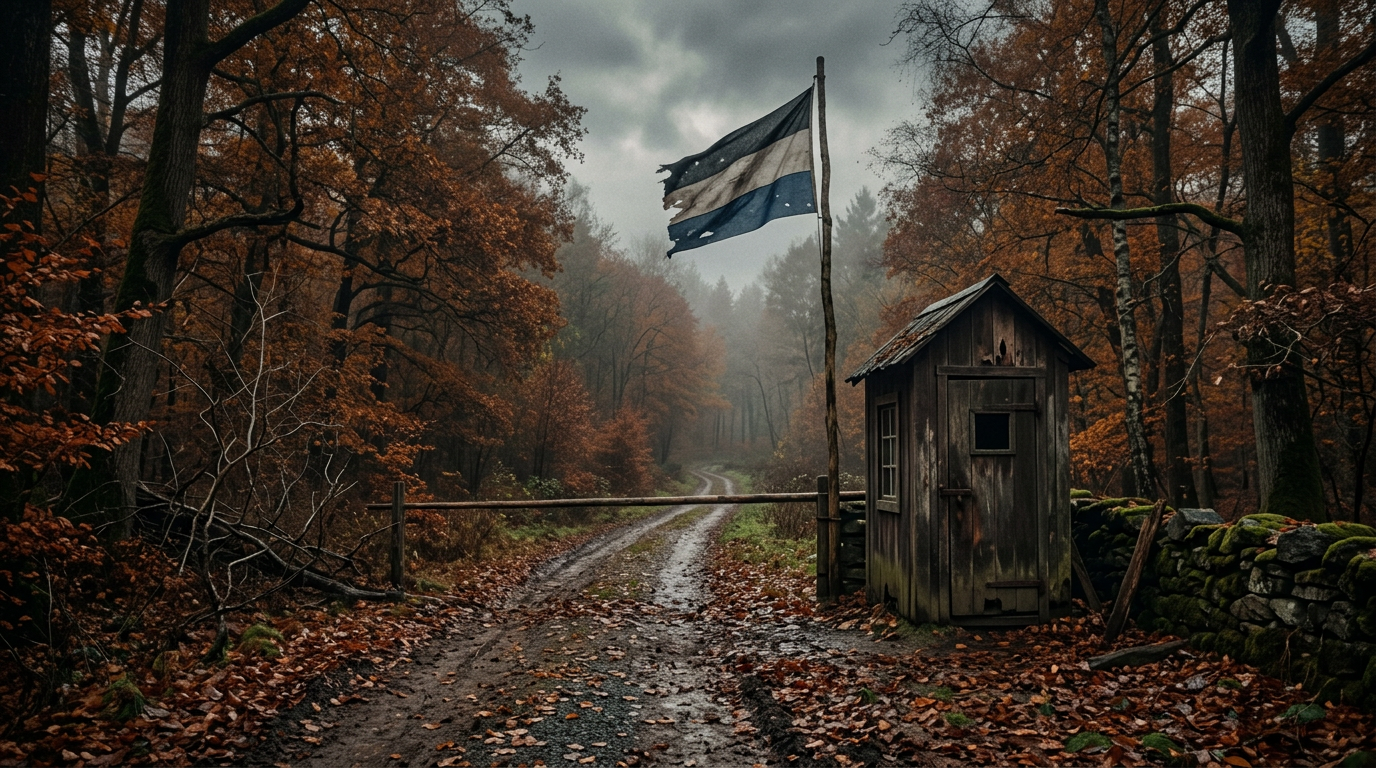

For more than a century, a tiny territory of just 3.5 square kilometres was an anomaly on the map of Europe. Caught between major powers, it was neither German nor Belgian. It became a haven for tax avoidance, had its own flag and came close to becoming the first state in the world to adopt Esperanto as its official language.
(Editorial: Belgium & Germany / History & Curiosities)
European maps are full of straight lines and borders drawn by diplomats, but also of small enclaves that defy logic. Few places, however, have a history as unusual as Moresnet. Today it is simply a border area between Belgium and Germany; in the past, it attracted speculators, idealists and people seeking to escape taxes.
The story began in 1816, shortly after the Congress of Vienna redrew Europe following Napoleon’s defeat. The Netherlands and Prussia negotiated their common border. Talks stalled over one issue: the highly profitable La Vieille-Montagne zinc mine, also known as Altenberg. Neither power was willing to give it up.
The diplomatic compromise was extraordinary. Rather than divide the mine, the negotiators divided the village and declared the mining area neutral territory. Thus Neutral Moresnet was created, a condominium jointly administered by the two states. When Belgium became independent from the Netherlands in 1830, it took over the Dutch role as co-administrator.
**A tax haven in the heart of Europe**
What happens when a territory belongs fully to neither neighbouring state? It can become a legal grey area—and an opportunity. Because Moresnet was neither Belgium nor Prussia, its residents enjoyed tax and customs advantages that were unusual in Europe at the time.
The result was striking. Its population grew from 256 in 1815 to almost 4,700 on the eve of the First World War. People came to trade, bring in contraband or enjoy freedoms unavailable elsewhere in Europe.
Moresnet developed symbols of its own. In 1883 it adopted a flag with three horizontal stripes—black, white and blue. A casino also operated there briefly from 1903, adding to the territory’s appeal before it was closed.
Amikejo: the dream of an Esperanto state
The most extraordinary chapter began in 1908. Local physician Wilhelm Molly proposed turning Moresnet into Amikejo, meaning “place of friendship”. He imagined the world’s first independent state with Esperanto as its official language. Created by L. L. Zamenhof, Esperanto was intended to bring peoples together.
Molly hoped the tiny territory would become the world capital of the Esperanto movement, a symbol of peace and international communication. He travelled to Switzerland to present the idea to Zamenhof. The project gained momentum, and Moresnet’s flag appeared alongside Esperanto symbols at international congresses.
The end of a dream
History, however, did not follow the idealists’ plans. The First World War ended the Amikejo project. In 1915, despite its neutral status, the territory was occupied and annexed by Germany. The Treaty of Versailles in 1919 settled the dispute: Moresnet was ceded to Belgium. The border was redrawn, the zinc mine became Belgian property and the microstate disappeared.
Conclusion
Today, the area that was once Moresnet is part of an ordinary Belgian town. Yet this 3.5-square-kilometre territory remains a fascinating lesson in history: diplomacy can become absurd when money and resources are at stake, while people can still imagine remarkable alternatives. Moresnet had no empire, army or recognition by the great powers. For a brief moment, however, it offered the possibility of a different future beneath a black, white and blue flag.

Leave a Reply