
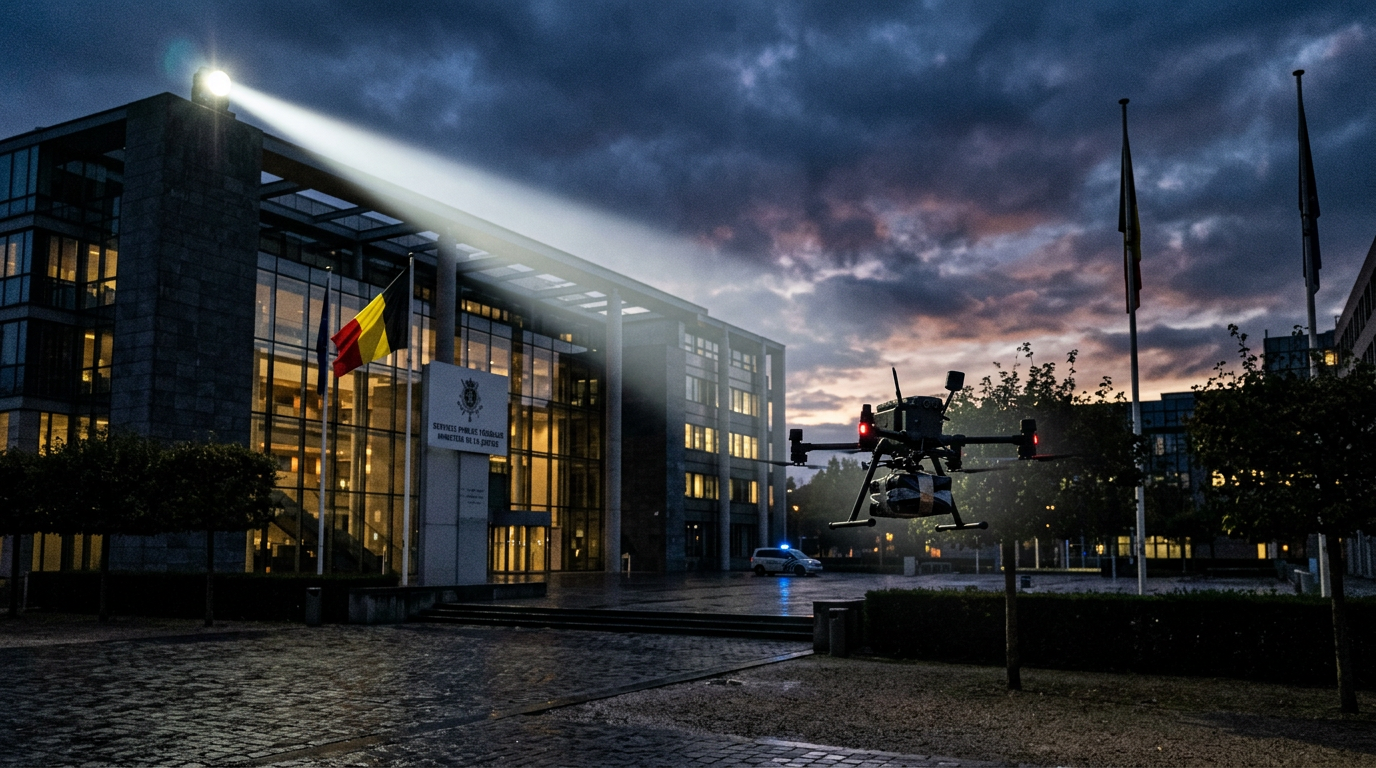

Two young men from Antwerp, one of Chechen origin and the other of Moroccan origin, have been sent to trial over an alleged plan to assassinate Prime Minister Bart De Wever. The method sounds like science fiction: an explosive-laden drone directed at his home. Although the defence argues that the plan was “technically impossible”, Belgian justice has treated the threat as serious.
(Staff: Belgium / Justice & Security)
In a world where terrorist threats may require neither an army nor a large organisation, but only an internet connection and a dangerous idea, a case that shook Belgium in autumn 2025 has returned to the courts. Two young men arrested last October have been formally referred for trial over an alleged plot to assassinate Prime Minister Bart De Wever. The weapon they allegedly planned to use was not an automatic rifle or a conventional homemade bomb, but a modified drone.
Who are the suspects?
According to the indictment, the suspects are Abdullah B., 23, of Chechen origin, and Abdulmajid E.J., 18, of Moroccan origin. Both lived in Antwerp. Abdullah B. studied cybersecurity at AP Hogeschool, while the younger suspect attended defence and security courses at Sint-Norbertusinstituut. Prosecutors say the two had the technical knowledge to plan a sophisticated attack.
The drone and the items seized
Investigators allege that the plan was to build a drone capable of carrying an explosive charge and direct it towards the private residence of Prime Minister Bart De Wever, near properties searched during the investigation. Police found a 3D printer at Abdullah B.’s home, which investigators believe may have been used to manufacture drone components.
At the second suspect’s home, investigators found an improvised explosive device (IED) and a bag of metal balls. The defence strongly disputes the interpretation of this evidence, arguing that the device was not functional and consisted of “a bag of sand and an empty can of sugary drink”; the metal balls, it claimed, were pellets for a toy weapon.
A wider investigation and multiple potential targets
The investigation indicated that De Wever was not the only potential target. Els van Doesburg, mayor of Antwerp, and Dutch politician Geert Wilders were also reportedly on the list. Wilders temporarily suspended his Dutch election campaign following the threat, underscoring its reported cross-border reach.
The investigation was launched after information from the FBI, highlighting the international dimension of the case. Three people were initially detained; one was later released for lack of evidence. The two remaining suspects stayed in pre-trial detention, with the court citing serious indications of guilt and the potential danger their release could pose to public safety.
The prime minister responds with humour
Despite the seriousness of the allegations, De Wever responded with irony. On social media, he posted a picture of his cat with the caption: “Maximus, can you catch a drone?” The joke pointed to a darker reality: in the 21st century, a potential attack can come not only from the ground but also from the air.
Conclusion
The case marks another chapter in Europe’s efforts to counter jihadist terrorism and emerging threats involving new technology. The allegations remain subject to judicial proceedings, and the court will determine the facts and responsibility. If the alleged device had been operational, the consequences could have been devastating. Belgian authorities say they prevented a potentially serious political attack; the outcome will now depend on the judicial process.


Leave a Reply