
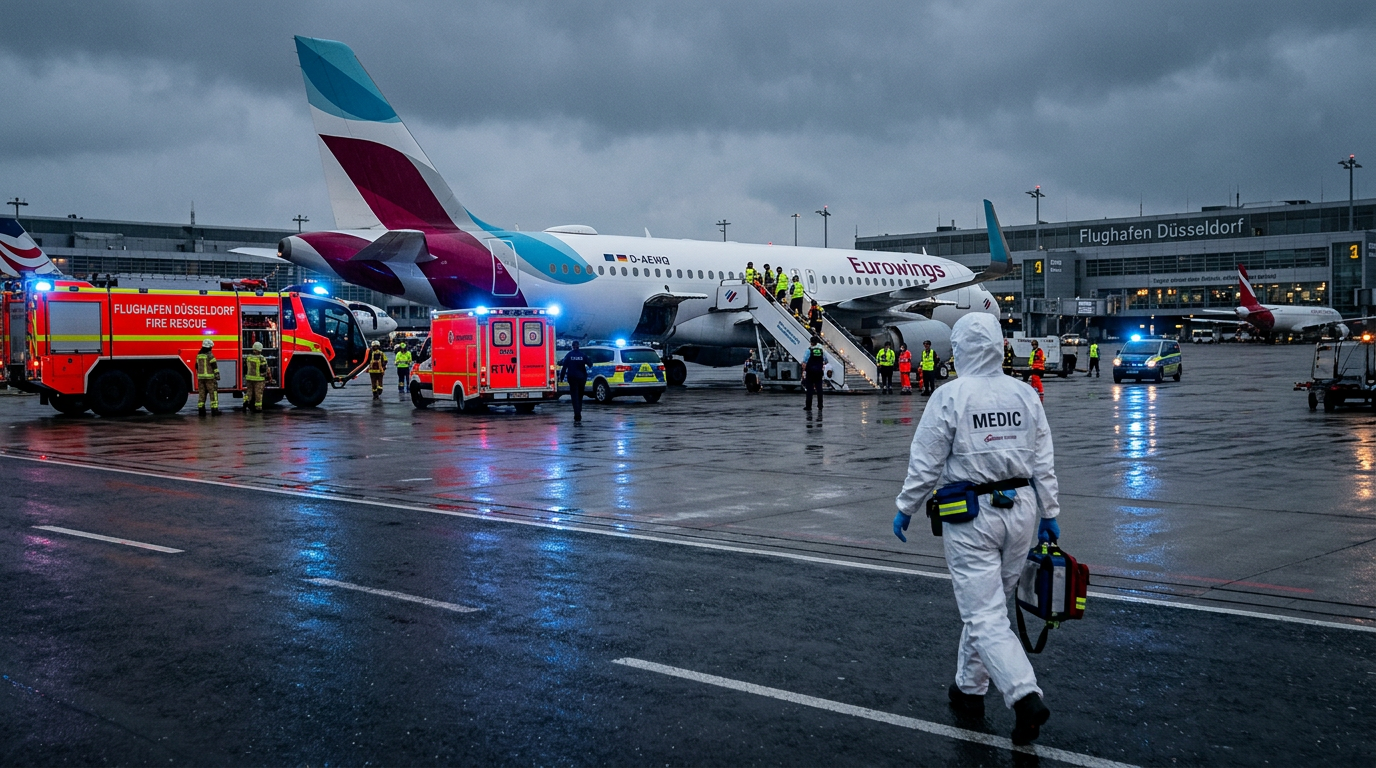

A Eurowings flight from Rhodes to Germany became a major health incident after several passengers began vomiting and reported abdominal pain. On landing, the airport activated its mass-casualty protocol and medical teams in protective suits boarded the aircraft. Three people were taken to hospital.
Staff: Germany & Greece / Health & Travel
Panic on board
A holiday on the Greek island of Rhodes should mean beaches, sunshine and relaxation. But for passengers on Eurowings flight EW9631, the return journey to Düsseldorf on 18 October became an experience they were unlikely to forget. What began as a routine flight ended with priority landing, a heightened alert at the airport and medical teams dressed for a potential biological hazard.
Emergency landing and a major response
According to witnesses quoted by international media, the incident began in flight. Two passengers suddenly became ill, suffering vomiting and stomach cramps. Cabin crew reacted quickly and put on protective masks, signalling that they were taking the situation seriously. A 28-year-old passenger named Nathalie told German public broadcaster WDR that norovirus was considered likely because the symptoms were typical. She also said gastrointestinal illnesses had long been reported at large hotel complexes on Rhodes. Most of the 212 passengers and seven crew members appeared well, but uncertainty spread through the cabin.
90 minutes of uncertainty
When the aircraft landed in Düsseldorf, passengers could see ambulances and fire engines waiting on the runway. The airport activated its mass-casualty alert as a precaution, ensuring enough medical resources would be available if more people became ill. The airport fire service deployed eight emergency vehicles, supported by additional city fire crews and ambulances. General air traffic was not affected. Another passenger, Kim, 34, travelling with her husband and two children, said the scale of the response initially seemed excessive, although she understood the need for precautions around a potentially contagious virus.
Fears of an outbreak in Rhodes
Passengers were not allowed to disembark immediately. For around 90 minutes, they remained on board while medical staff in full protective suits examined them, checked temperatures and asked about symptoms. Three passengers were taken to hospital for precautionary treatment. Those without symptoms were allowed to continue home. Eurowings said it was not yet known whether the illness was caused by an infection or food poisoning; the investigation was ongoing.
Conclusion
Although the airline had not confirmed the cause, attention quickly turned to reports of a possible norovirus outbreak in Rhodes dating back to July. According to accounts, large hotels in the area had experienced gastrointestinal illnesses among tourists for months. Norovirus is highly contagious and can spread rapidly in enclosed spaces such as an aircraft cabin. It causes acute gastroenteritis, including nausea, vomiting, diarrhoea and abdominal pain; symptoms generally last 12 to 48 hours. It is usually not life-threatening for healthy people, but can be more dangerous for young children, older adults and people with weakened immune systems.
The EW9631 incident shows how a public-health concern at a holiday destination can become a cross-border emergency within hours. Düsseldorf Airport and Eurowings chose to mobilise resources rather than risk an uncontrolled spread. For travellers, careful hygiene and attention to symptoms remain important. Norovirus needs no passport to cross borders.



Leave a Reply