
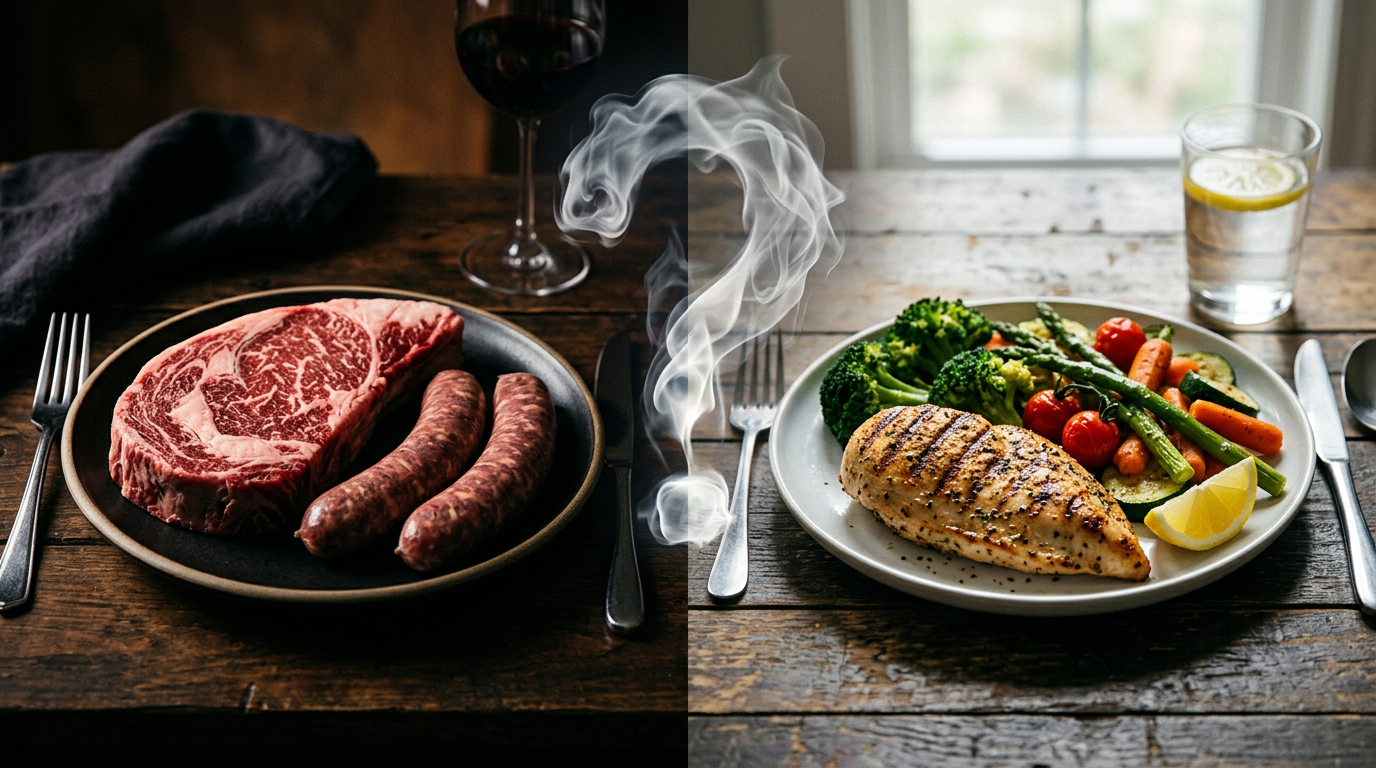

The debate about which meat is harmful to health is often polarized. But the answer is not black and white. It all depends on how the animal was raised, the processing of the meat, the method of preparation and, not least, the amount and frequency with which we consume it. Here is what the specialists say about the real risks of eating meat.
(Staff: Global / Health & Nutrition)
Meat is not just meat
When it comes to health, not all types of meat are the same. Some nutritionists warn of the danger of red meat, others emphasize the risks of processed meat, and some consider white meat to be the ideal solution. In reality, however, the answer is more nuanced. The quality of the meat depends on a number of factors that are not only related to the species of the animal. The way it was fed, the growing conditions, the processing and preparation methods have an equally great, if not even greater, impact on the effects it has on the body.
Processed meat – the greatest risk, scientifically confirmed
The World Health Organization (WHO), through the International Agency for Research on Cancer (IARC), has classified the processed meat in Group 1 – carcinogenic for humans, along with tobacco and asbestos. This includes sausages, salami, sausage, ham, bacon and other products that have been treated by salting, smoking or fermentation to be preserved or to acquire a certain taste. According to the WHO, every 50-gram serving of processed meat consumed daily (equivalent to about two slices of ham) increases the risk of colorectal cancer by about 18%. In addition, the consumption of processed meat is also associated with an increased risk of type 2 diabetes by more than 50%.
Red meat – a likely risk, not certain
Red meat (beef, pork, lamb, goat, horse) was classified by the WHO in Group 2A – probably carcinogenic to humans. . This means that there is limited evidence linking red meat consumption to colorectal cancer, but also strong mechanical evidence supporting this link. In the case of unprocessed red meat, daily consumption is associated with an increased risk of type 2 diabetes by about 40%, but the risks depend heavily on quantity, frequency and preparation method. Studies show that high-temperature cooking methods, such as frying or grilling, can generate carcinogenic compounds such as heterocyclic amines and polycyclic aromatic hydrocarbons, which contribute to increased risk.
White meat – safer, but not risk-free
White meat (chicken, turkey) is generally considered healthier than red because it contains less saturated fat and more quality protein. However, its preparation is also essential: fried or breaded chicken breast is as harmful as any other processed food. Also, the way the chicken was raised – if it was fed with corn or processed feed, if it received antibiotics – influences the quality of the meat.
Not only the type, but also the origin and method of preparation matters
Specialists point out that it is not enough to choose “white meat” or “red meat”. It is essential to know where the meat comes from. Animals raised in intensive farms, fed with processed feed and treated with antibiotics and hormones, produce a lower quality meat with a higher content of saturated fats and chemicals. In contrast, meat from animals raised in the wild, grass-fed and antibiotic-free, is richer in omega-3 fatty acids and essential nutrients.
Conclusion: less, more attentive and more diversified
The real question is not “What flesh is bad?”, but “How much, how often and under what conditions do I eat meat?” Nutritionists recommend a moderate consumption of red meat (maximum 3 servings per week) and the lowest possible consumption of processed meat. It is also important to diversify protein sources, including fish, legumes, nuts and seeds. Replacing a portion of processed red meat with nuts or vegetables can reduce the risk of diabetes by up to 30%.
There is no simple answer to the question “Which meat is unhealthy.” There are only better and less good choices, depending on the context. The more we know about what we put on our plate, the wiser we can make choices for our health.





Leave a Reply