
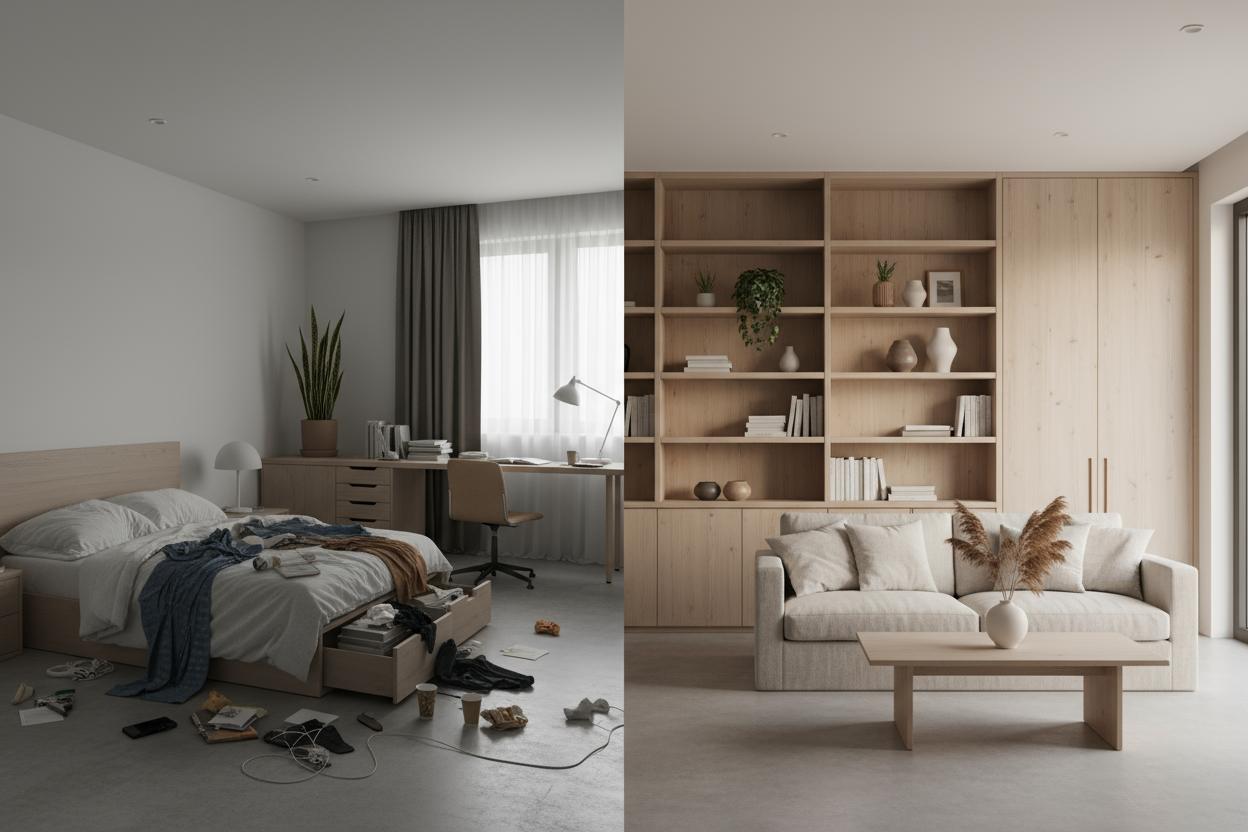

Sometimes, we don’t need more space to feel better, but fewer things that demand our attention. The secret of a relaxing hotel room can be hidden in light, order, design and, above all, in the absence of daily responsibilities.
(Staff: International/Lifestyle and Design)
Have you ever noticed that you can go into a relatively small hotel room, leave your luggage by the bed and, after a few minutes, feel like you’re out of the usual rhythm of life? At home you may have a much larger apartment, more expensive furniture, personal items and all the things you need. And yet, sometimes it’s the hardest time you get out of the way.
The paradox is interesting: a smaller space can create the feeling of a refuge, while a generous home can become a permanent list of things to do. The difference is not necessarily the size of the room, but the experience it builds around us.
1. Less objects, less things that demand your attention
In a regular home there are numerous visual clues that remind us of responsibilities: clothes that need to be put back in place, documents, items to repair, dishes, shopping, appliances and things that are waiting to be solved.
Even if we don’t deal with them permanently, their mere presence can maintain the feeling that we have something to do.
In a well-appointed hotel room, most of these items are missing. The bed is ready, the surfaces are tidy, the bathroom is clean, and the objects are placed so that they are easy to use.
You don’t have to reorganize anything or think about the next household activity.
This simplicity can help reduce mental stress and create a sense of tranquility.
2. Light changing the atmosphere of a room
One of the most important elements of hotel design is lighting.
Instead of a single powerful light source, many rooms use several lighting points: bedside lamps, decorative fixtures, indirect light and functional lighting in the required areas.
Warm light and intensity adapted to the time of day can contribute to a more comfortable atmosphere.
A study published in Journal of Interior Design, which analyzed the preferences of some participants from North America and South Korea, identified cultural differences in the way people perceive the intensity and temperature of the light. This proves that there is no single universal formula for a relaxing room.
It is important that the lighting allows the space to adapt to the activity and the preferences of the person.
3. The bed becomes the center of experience
In a hotel room, the bed is not just a piece of furniture. It represents the center of the entire design concept.
Clean textiles, comfortable mattress, pillows, the right temperature and easy access to the lighting next to the bed contribute to the feeling of comfort.
Hotels invest in this experience because rest is one of the main expectations of guests.
Research on the multisensory experience in hotels shows that ambient lighting, textiles and the intelligent organization of the space influence the way the room is perceived.
Sometimes comfort does not come from the number of objects, but from the attention given to the few elements we really use.
4. Intimacy and the feeling of refuge
A small, well-organized room can create a pleasant feeling of protection and privacy.
Environmental psychology has been studying the relationship between built space and emotional state for a long time. An important concept is prospect-refuge: People can appreciate the spaces where they have both a perspective on the environment and the feeling of a protected place.
In a hotel room, the curtains, the location of the bed, furniture and lighting can contribute to this experience.
A window overlooking a park, some plants, natural materials and a well-defined rest area can transform a modest room into a pleasant space.
It is not mandatory that the room is large. It is important to be well thought out.
5. Greatest Luxury: Not being in charge of anything
Perhaps here is the real explanation of the difference between the hotel room and your own home.
At home, even when we sit on the sofa, we know there are things to do. Home maintenance, bills, cleanliness, shopping and family life organization do not disappear just because we decided to rest.
In the hotel, some of these responsibilities are taken over by the unit’s staff.
You don’t have to change the underwear, clean the bathroom or take care of the maintenance of the space. For a limited period, you can benefit from an environment prepared for you.
Therefore, relaxation is not produced exclusively by interior design. It is also related to the temporary change of our role: from the person who organizes and maintains the home we become the guest who uses an already prepared space.
6. How you can bring the hotel experience into your own apartment
There is no need to renovate the entire home or invest in expensive furniture to reproduce some of this experience.
A few changes can have a visible effect on the atmosphere:
- Frees surfaces from unnecessary objects.
- Use two or three light sources instead of a single powerful ceiling light.
- Choose textiles that are pleasing to the touch and comfortable bed linen.
- Organize the objects so that everyone has a well-defined place.
- Enter some natural elements, such as plants or wood.
- Keep the bedroom as far away from administrative and professional activities as possible.
- Create a small evening ritual, no phone, notifications and screens.
The most important thing is not to turn the arrangement into a new source of stress. The goal is not to get a perfect camera for photos, but a space where you feel good.
Conclusion – we don’t always need more space, but more quiet
A hotel room can be smaller than our apartment and still provide a more pleasant rest experience. There is no scientific rule that we relax ten times faster in a hotel, but there is enough research that shows that lighting, organization, materials, privacy and atmosphere influence the experience of a space.
Perhaps the real lesson of hotel design is that a home does not have to be just a place where we store things and solve problems.
It should also be the place where we can stop, breathe and recover our energy.
And sometimes, the biggest luxury is not a bigger room, but a room where, for a few hours, we have nothing left to solve.




Leave a Reply