
A comparison of road infrastructure in Belgium and the Netherlands shows that even the structure of the asphalt can affect traffic flow, visibility and the formation of traffic jams.

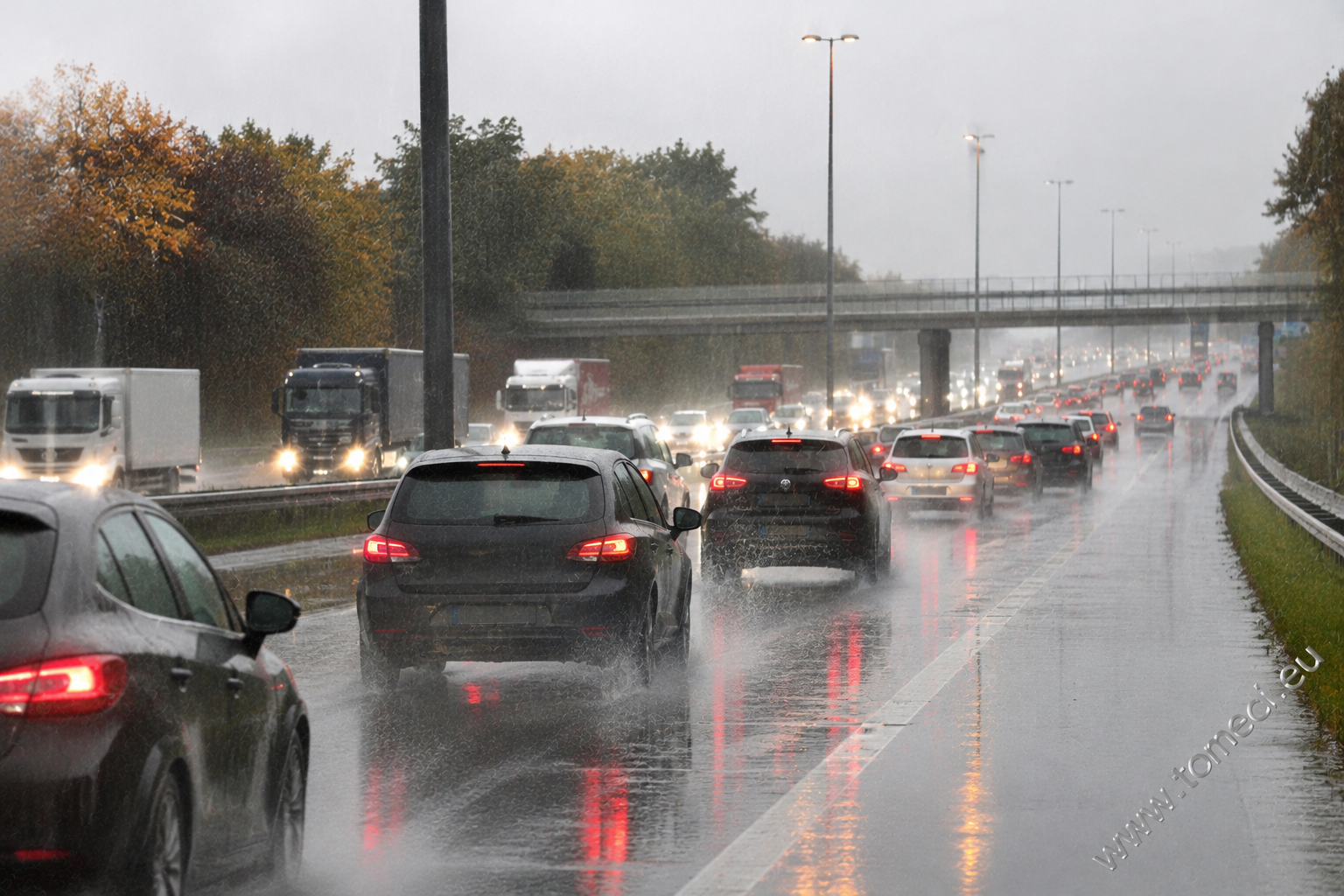
Heavy rain is enough to bring traffic to a standstill on many Belgian motorways. In the Netherlands, by contrast, traffic seems to cope better with similar weather conditions. Why is that?
According to an analysis presented by VRT NWS, one important explanation lies right beneath the car tyres: the type of asphalt used on motorways.
Belgium: durable, but less permeable asphalt
Belgian motorways often use SMA – Steenmastiekasfalt, a type of asphalt with a dense structure, valued for its strength and durability.
The problem arises during prolonged rainfall. This type of surface allows less water to drain away, so a film of water can form on the road.
The consequences are clear: vehicle tyres throw up spray, visibility decreases, road markings become harder to distinguish, and drivers leave larger gaps and reduce their speed.
According to traffic expert Hajo Beeckman, the traffic capacity of a road with this type of asphalt can fall by 5–20% during persistent rain. On a motorway that is already heavily congested, this reduction can quickly trigger traffic jams.
The Netherlands: asphalt that lets water drain through
On Dutch motorways, ZOAB is widely used – Zeer Open Asfaltbeton, meaning asphalt with a very open, porous structure.
The pores in the material allow water to penetrate the upper layer and drain sideways through the road structure. As a result, much less water remains on the surface.
The benefits are significant: less spray from vehicles, better visibility, road markings that are easier to see and more comfortable driving conditions in the rain. ZOAB also helps reduce traffic noise.
Why doesn’t Belgium use the same solution?
Porous asphalt, however, is not a perfect solution.
It is more expensive to install and maintain, and its service life may be shorter because the open structure is more vulnerable to wear and the loss of aggregate.
There are also disadvantages in colder seasons. The porous structure allows cold to penetrate more quickly, while the salt used for snow and ice control can be diluted and washed away sooner. Under certain conditions, this makes it harder to keep the road safe during freezing weather and snowfall.
The two solutions therefore involve different trade-offs: dense asphalt offers durability advantages, while porous asphalt is particularly useful in wet conditions.
Asphalt is not the only factor
VRT NWS also identifies two other important causes of traffic jams in Belgium.
The first is motorway capacity. According to the expert, Belgium’s road network operates close to its capacity limit every day. When a disruption occurs, even one caused by rain, there is not enough spare capacity to absorb the resulting slowdown.
The second problem is the maintenance of drainage systems. Leaves and other debris can block drains, and the resulting standing water becomes an additional hazard, especially in tunnels.
Two solutions, two different trade-offs
The comparison between Belgium and the Netherlands shows that road infrastructure is about more than the number of lanes or the width of motorways. The materials used, and how they respond to rain, frost and heavy traffic, matter just as much.
Porous asphalt in the Netherlands offers clear benefits in rainy weather, but it brings additional costs and challenges in winter. The dense asphalt used in Belgium is more durable in some respects, but it can encourage water to build up on the surface.
There is therefore no solution without drawbacks. The key lesson is that, for traffic to function in every season, infrastructure must be designed with the climate, traffic volumes and maintenance costs in mind.


Leave a Reply