
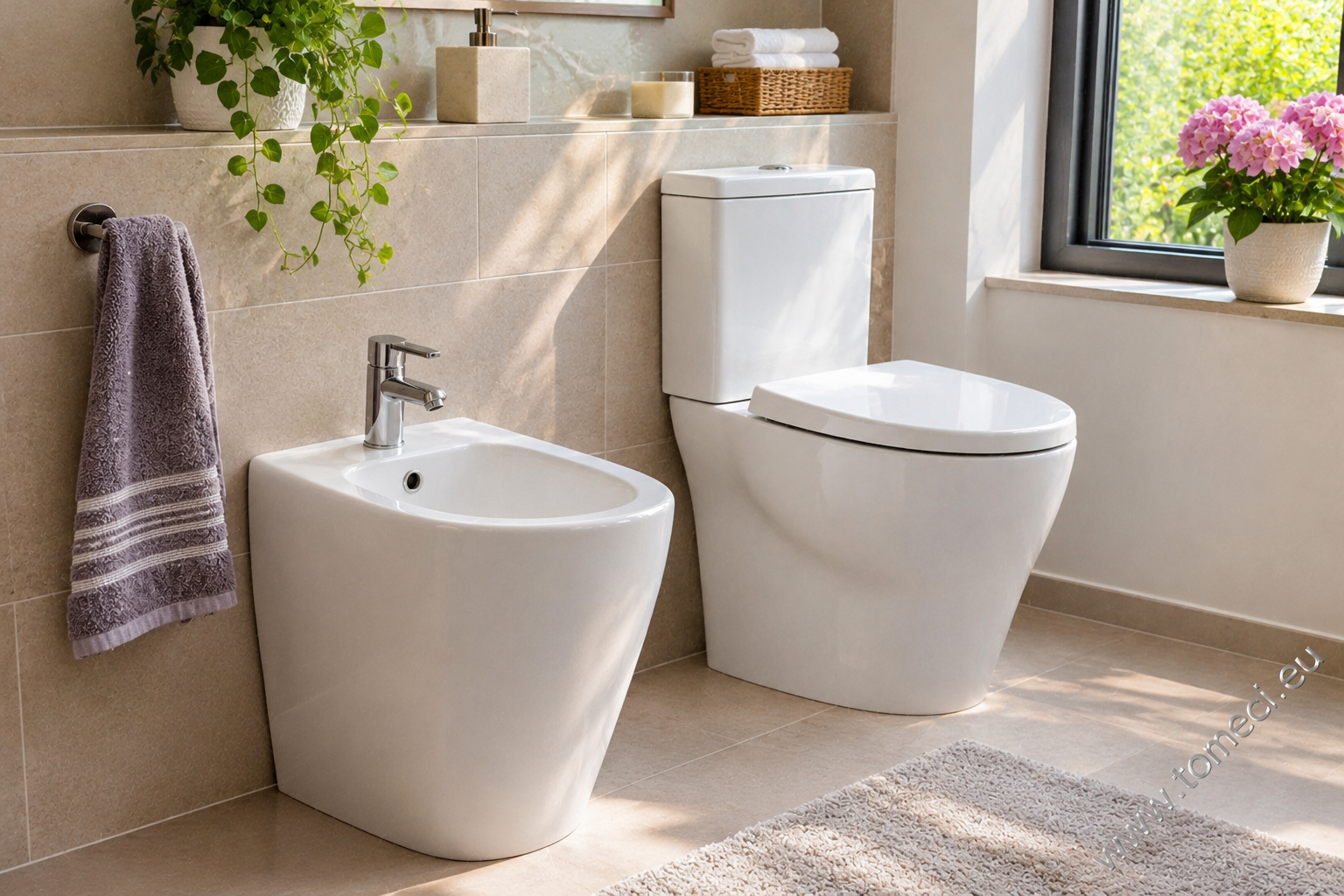
A daily habit, practised differently across cultures, has become the subject of an interesting debate: is toilet paper enough, or does water provide a more effective and gentler clean? The answer concerns both hygiene and skin health.

Few subjects are such a routine part of everyday life, yet so rarely discussed openly, as intimate hygiene after using the toilet. In some European countries, toilet paper is the usual method. In many parts of Asia, the Middle East and southern Europe, water or a bidet has long been part of the daily routine.
A discussion published on a Dutch platform brought the question back into focus: is washing with water more hygienic than using toilet paper alone?
The experts’ answer is more nuanced than it may seem. Water can remove residue more effectively and reduce friction on the skin, but the result depends on how it is used. When used correctly, toilet paper is not inherently an unsafe method either.
Toilet paper: practical, but sometimes irritating
Toilet paper remains the traditional method in many European households. It is affordable, easy to use and does not require additional installations.
Cleaning solely by wiping can have drawbacks. Rough paper, excessive wiping or skin that is already irritated can leave the sensitive area around the anus red, sore or even more irritated.
In certain situations — including haemorrhoids, anal fissures, diarrhoea or the period after childbirth — repeated friction can make discomfort worse.
That is why medical advice emphasises gentle cleaning rather than repeated rubbing until the paper comes away completely clean.
Water: a gentle and effective alternative
Washing with lukewarm water, using a bidet or hygiene spray, can remove residue without repeated friction.
This method is also recommended in some medical guidance for people who experience irritation or sensitivity around the anal area.
The advantages are important:
- Water can remove residue more effectively than dry toilet paper alone.
- It reduces mechanical friction on the skin.
- It may be more comfortable for people with haemorrhoids or certain irritations.
- It allows gentle cleaning with lukewarm water.
There is one essential rule: wash the area gently, then pat it dry rather than rubbing. Moisture that remains for too long can also cause irritation.
Is soap necessary?
Not necessarily. For sensitive skin around the anus, plain water is often enough.
Scented soaps, disinfectants and harsh cleansing gels can damage the skin’s natural protective barrier and cause dryness, stinging or irritation.
Experts recommend avoiding fragranced products and excessive cleaning. The aim is not to sterilise an area where bacteria are naturally present, but to remove residue and keep the skin healthy.
It is important to understand that the presence of bacteria does not automatically mean lack of hygiene. The human body has a natural microbial flora, and the objective of personal hygiene is not to eliminate all microorganisms.
Bidets and hygiene sprays: what should you know?
The bidet has long been used in many European and Asian countries. In recent years, modern toilets with an integrated wash function have also become more popular.
These devices can provide comfortable cleaning, but must be used correctly.
Some rules are important:
- Use clean water at a comfortable temperature.
- Choose a moderate pressure of the jet.
- Direct the water from the front to the back, especially in the case of women.
- Do not insert the water jet inside the anus or vagina.
- Periodically clean the nozzle of the device according to the manufacturer’s instructions.
- Dry the area gently after washing.
For women, the direction of cleaning is especially important. The transfer of bacteria from the anal area to the urethra or vagina can favor the occurrence of infections.
Also, excessive use of the bidet or too much pressure of the jet can irritate the skin. More water does not automatically mean better hygiene.
What about the water bottle kept beside the toilet?
The Dutch discussion also raises an interesting issue: using a shared bottle of water that is kept permanently beside the toilet.
This can be practical when there is no bidet or hygiene spray, but the container must be kept clean. If the bottle opening or cap touches unwashed hands or other contaminated surfaces, microorganisms may be transferred.
This does not mean that any water bottle is dangerous. It only means that the container should be used hygienically, cleaned regularly and kept in proper conditions.
A washing device connected to a clean water source can be a more convenient and easier to maintain solution.
The rule not to forget: washing your hands
Whichever method is used — toilet paper, water, a bidet or a hygiene spray — one rule remains unchanged: wash your hands with soap and water after using the toilet.
Microorganisms from faecal matter can be transferred by hands to objects, surfaces, food and other people.
Proper handwashing is one of the most important measures for preventing the spread of gastrointestinal infections.
Neither the most modern toilet nor the most advanced bidet can replace this rule.
Is there, after all, a better option?
When it comes to removing residue while protecting the skin from friction, water has clear advantages. For this reason, many medical recommendations support gentle washing with water, especially for people with irritation or conditions affecting the anal area.
But we must not turn this conclusion into a judgment on cultural customs. The correct use of toilet paper remains an acceptable cleaning method for people without special problems.
For many people, a practical approach is to use toilet paper gently when needed, rinse with water afterwards and pat the area dry.
Hygiene does not mean using as many products as possible, rubbing as hard as possible or trying to remove every bacterium from the body. It means cleaning effectively without harming the skin, avoiding contamination and following a few simple rules.
Perhaps the real difference is not between people who use paper and those who use water, but between hygiene practised properly and hygiene carried out in a hurry or to excess.




Leave a Reply