
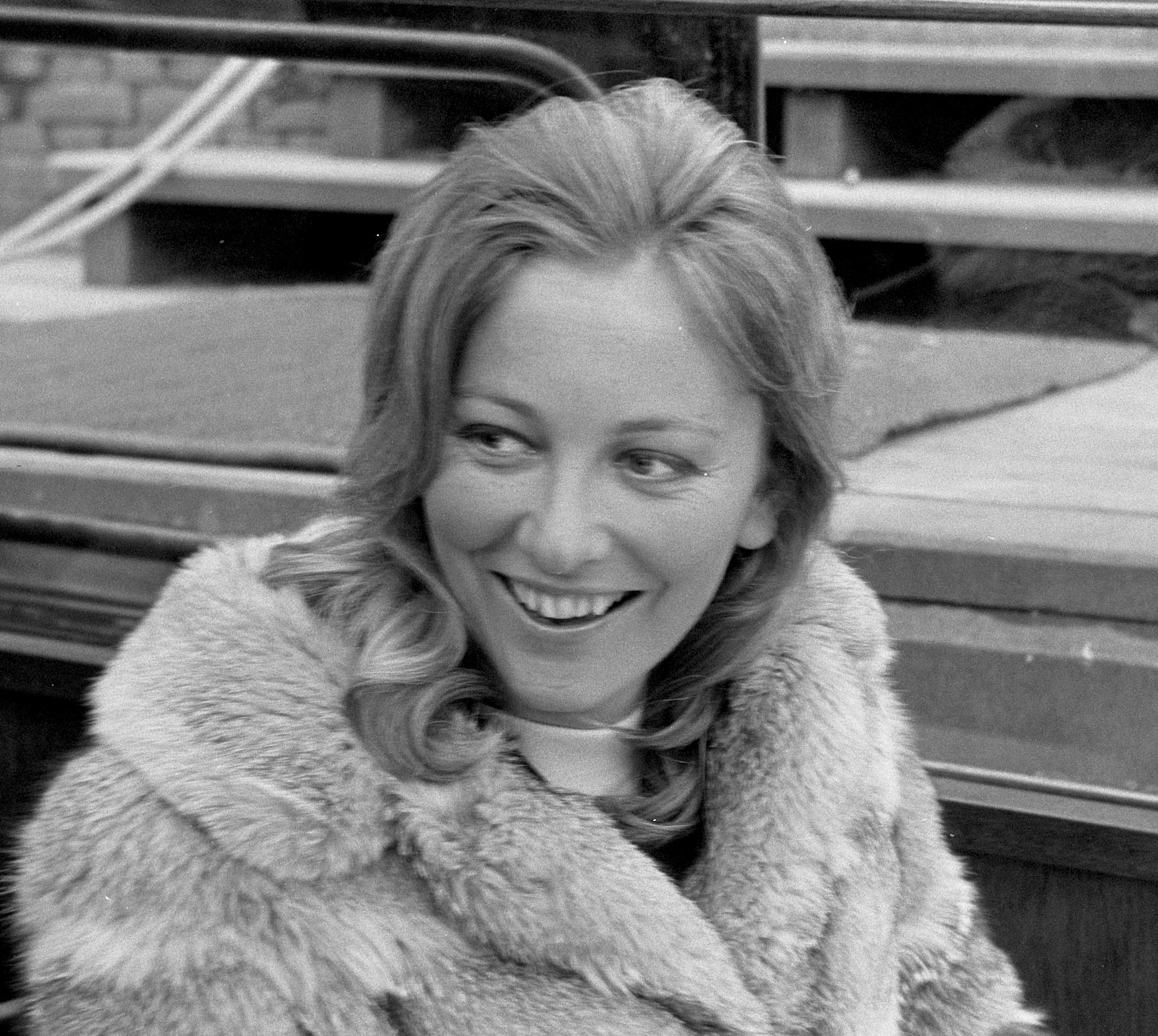
Behind the portrait of a young princess admired for her beauty lies the story of a woman who has lived through almost a century of change: her childhood in Italy, her marriage to a Belgian prince, life at court, difficult years for her family and the joy of becoming a grandmother.

The black-and-white photograph circulating on social media shows Paola, the young Italian aristocrat who would become one of the best-known figures of the Belgian monarchy. Her elegance, carefully styled hair and distinctive gaze came to represent, for many, an era when royal families seemed to inhabit a world of their own, followed by the public with fascination.
But Paola Ruffo di Calabria’s story is about more than a princess becoming a queen. It is also the story of a woman who had to find her place in a country, a family and an institution whose traditions and expectations were very different from the world in which she had grown up.
An Italian princess arrives in Belgium
Paola was born on 11 September 1937 in Forte dei Marmi, Italy. She came from an aristocratic family and was the daughter of Prince Fulco Ruffo di Calabria and Countess Luisa Gazelli. The youngest of seven children, she spent her youth in Rome, where she received a classical education that included Latin and Greek.
Her life changed after she met Prince Albert of Belgium. They married on 2 July 1959, and Paola became part of a European royal family.
At the time, there was no certainty that Albert would become king. The young Italian woman was therefore not simply preparing for the role of queen, but for a life alongside a member of the Belgian royal family.
In the years that followed, the couple had three children: Philippe, Astrid and Laurent.
The beauty of a princess and the challenges of a new life
Paola’s arrival in Belgium attracted media attention and public admiration. She was regarded as an elegant princess with a distinctive personal style.
Settling into a new country, however, was not without its challenges. Language, cultural differences and public expectations all presented significant difficulties.
In a documentary made by RTBF and broadcast in February 2022, Paola spoke about how difficult it had been to learn Dutch and about the efforts she had made, even though they were not always acknowledged.
In the same documentary, she and Albert also looked back on a difficult period in their marriage. Paola recalled years when she felt lonely and unhappy, and when their relationship went through a profound crisis.
It is a lesser-known side of royal life: beyond ceremonies, official photographs and public appearances, members of royal families also face personal and family difficulties similar to those experienced by many others.
Queen of the Belgians from 1993
In August 1993, following the death of King Baudouin, Albert became King of the Belgians and Paola became queen.
Her public role expanded, with a particular focus on social and cultural causes. Established in 1992, the Queen Paola Foundation promotes social integration and the education and training of young people. It also supports teachers and schools in disadvantaged socio-economic circumstances.
Paola was also involved in protecting Belgium’s heritage, supporting the arts and promoting traditional and contemporary crafts.
She also served as honorary president of the Queen Elisabeth Music Chapel and the organization Missing Children Europe.
These activities became an important part of her public identity, beyond her role as the king’s wife.
Albert’s abdication and a new chapter in life
On 21 July 2013, Albert II abdicated in favour of his son Philippe. Belgium entered a new chapter in its monarchy, and Paola’s time as the reigning queen consort came to an end.
She nevertheless continues to hold the title of Queen Paola and remains an important member of the royal family.
Her son Philippe became king, and Mathilde became Queen of the Belgians. The family grew, and Paola came to experience another dimension of life: being a grandmother.
Meanwhile, the Belgian monarchy has become a family spanning several generations. It brings together the experiences of a generation that grew up in Europe before today’s transformations and the aspirations of a younger generation far more closely connected to the world as it is now.
From princess to grandmother: beyond the titles
The Belgian monarchy’s official website highlights the importance of family in Paola’s life. The queen enjoys spending time with her grandchildren, walking in nature with Albert, reading, listening to music and travelling.
Perhaps this is where the most beautiful part of her story lies.
The young princess in the black-and-white photograph could not have known what her life would look like decades later. She could not have anticipated royal responsibilities, difficult periods in her marriage, changes within her family or the day her son would become king.
Today, her image is no longer defined only by the elegance of a young aristocrat or the public appearances of a queen. It is also the image of a woman who has passed through different stages of life, with their moments of joy, challenges and change.
Titles change and generations pass, but the role of mother and grandmother remains one of the most personal chapters in a person’s life.
Paola’s story reminds us that beyond crowns and protocol, members of royal families also have lives and stories that are deeply human.



Leave a Reply