
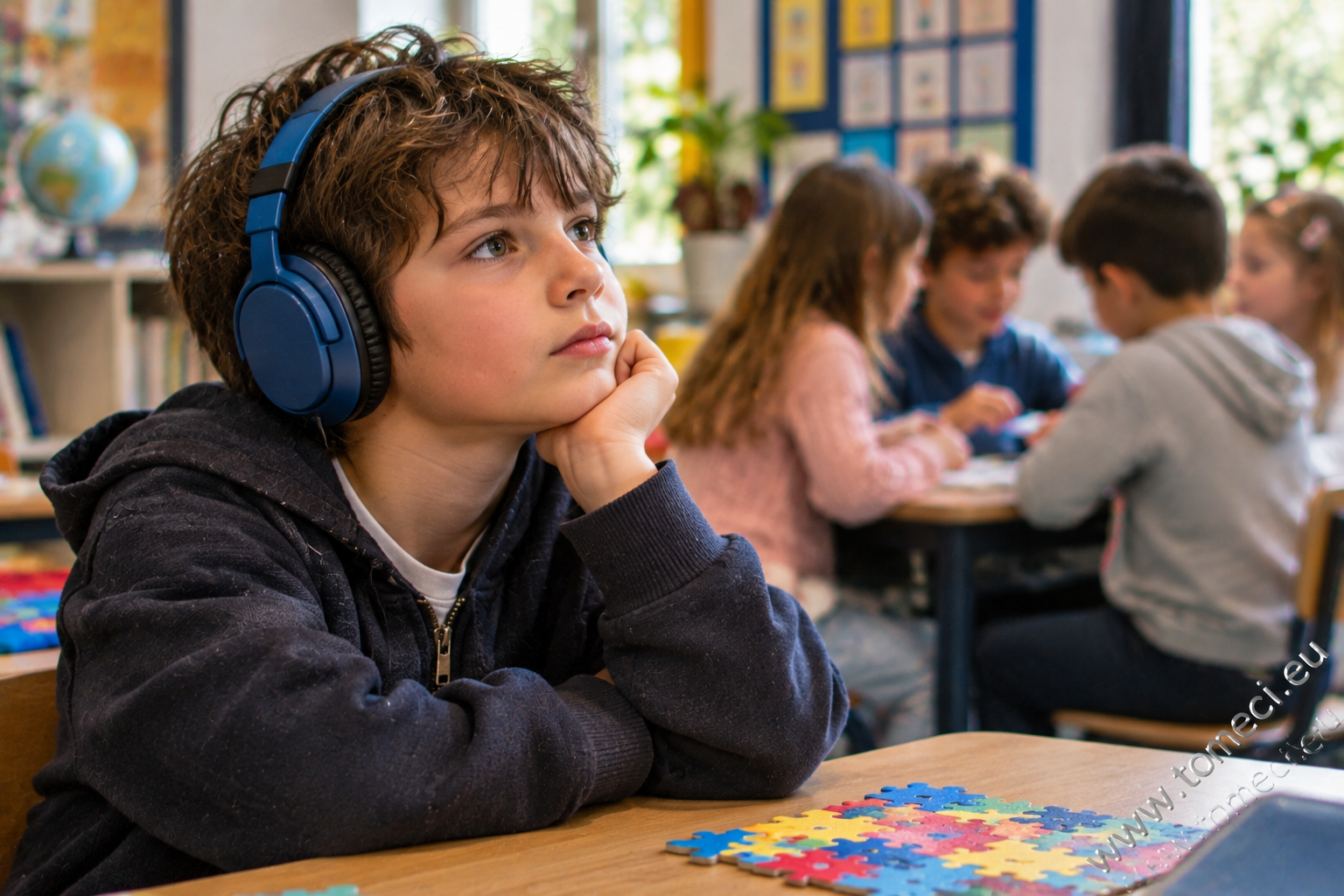
Autism is not a condition that emerged in recent decades. It is a neurodevelopmental difference that existed long before medicine was able to identify and describe it accurately.

In 1943, psychiatrist Leo Kanner published one of the first significant medical descriptions of childhood autism, after observing a group of children with distinctive patterns of communication, social interaction and behaviour. Autism was not officially recognised as a distinct diagnosis in the American DSM-III manual until 1980. It was recognised as a separate category in the international ICD classification in 1992.
This means that many people who lived through the 1950s, 1960s or 1970s never had the opportunity to receive a diagnosis that we recognise today.
When differences were mistaken for character flaws
In the past, a child who avoided group games, could not tolerate noise, needed strict routines or communicated differently might have been considered stubborn, disobedient, withdrawn or badly brought up.
Some children were isolated from their classmates, scolded for repetitive movements or punished for not adapting to classroom rules. Others were considered very intelligent but “absent-minded” because they achieved excellent results in one area while struggling in others.
Adults could also be misunderstood. A grandfather who preferred to work alone, needed order and became upset when someone moved his belongings might have been called grumpy or difficult. A woman who avoided noisy gatherings and small talk might have been considered cold or aloof.
In retrospect, some of these behaviours may resemble traits found in autistic people. But we cannot diagnose someone who has died based only on memories or habits. Autism has specific clinical criteria, and every person is different.
What do we know about autism today?
Autism is a neurodevelopmental condition with an important genetic component. Studies show high heritability at the population level, but this does not mean that every autistic person inherited autism directly from a parent or grandparent. Many genetic variants are involved, and developmental and environmental factors may also contribute to its emergence.
Autism presents in many different ways. Some people have significant communication difficulties and need ongoing support. Others speak fluently, study, work and live independently, but experience difficulties in social situations, when faced with unexpected changes or in environments with a great deal of noise and sensory stimulation.
Sensitivity to sounds, light, smells or touch can be very intense. Some people prefer stable routines, develop deeply focused interests or need extra time to process information and conversations.
Autism can co-occur with ADHD, but the two are distinct conditions. Neither limited eye contact, nor shyness, nor a preference for being alone is, by itself, enough to establish a diagnosis.
Why are more people being diagnosed today?
There is no single explanation. Diagnostic criteria have changed, the spectrum now includes a wider range of presentations, professionals are better at recognising the signs, and families have access to more information and assessments.
In the past, many people who did not fit the classic picture of autism may have remained undiagnosed. Women and people whose difficulties were less visible were especially likely to be identified late.
Some people learn to hide or control their behaviours in order to fit in socially. This effort, sometimes called “masking” or camouflaging, can be exhausting and may contribute to burnout.
It is also inaccurate to claim that autistic people have perfect memories or that their brains do not prune neural connections. Brain development is complex, and research does not support such generalisations.
Fewer labels, greater understanding
Perhaps every family has memories of someone who was considered difficult, withdrawn, overly sensitive or unusually absorbed in a particular subject. We should not retrospectively assign that person a diagnosis, but we can understand that differences in behaviour do not automatically mean poor upbringing, malice or a character flaw.
Today we have more knowledge and better tools to recognise people’s needs. Children should not be humiliated for perceiving the world differently, and adults should not be forced to pretend all the time to be someone else in order to be accepted.
Autism did not appear yesterday. What has changed is our ability to recognise it and, hopefully, to better understand the people who live with it.

THE WEEKEND MAGAZINE – A Tomeci Press Publication



Leave a Reply