
From French culinary tradition to the European table: what does the word “terrine” really mean, how is it prepared, and how does it differ from the much more familiar tartine?

In French gastronomy, some terms can cause surprising confusion when they are adopted by other languages. The word terrine is one example. Although its sound and spelling are similar to “tartine”, the two words have different meanings and refer to different kinds of food.
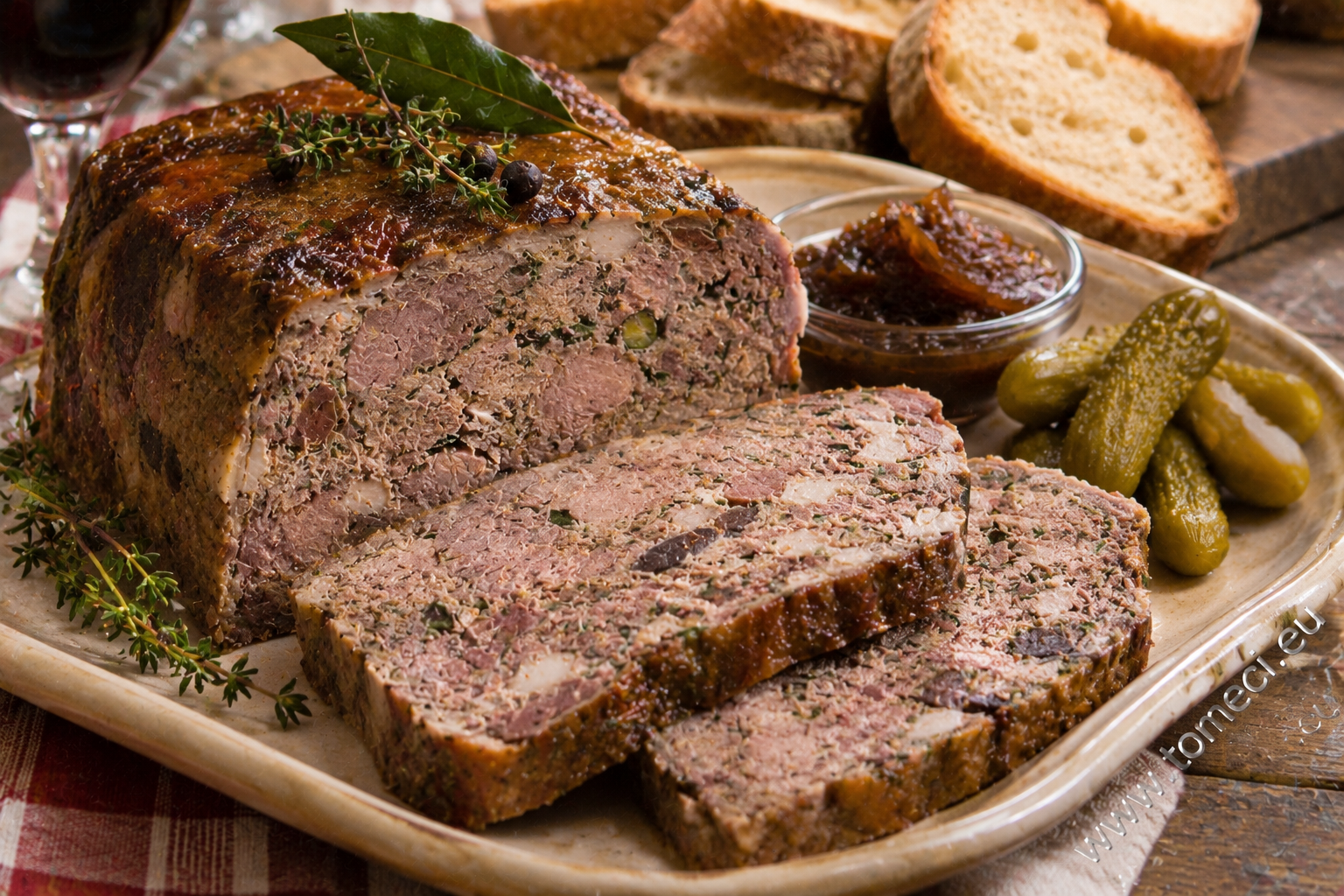
A terrine de cerf is neither a tartine topped with venison nor a slice of bread topped with a savoury paste. It is a traditional French preparation made from seasoned meat, cooked and baked in a special dish, then chilled and usually served in slices.
What does “terrine” actually mean?
The French word terrine originally referred to a cooking dish, traditionally made of earthenware or ceramic, used to prepare certain foods. Over time, the name of the vessel also came to refer to the dish cooked inside it.
In culinary terms, a terrine is a preparation made from meat, fish, liver or even vegetables, seasoned with salt, pepper, spices and aromatic herbs, placed in a mould and cooked in the oven. After cooking, it is left to cool and is often served cold, cut into slices.
The texture can vary considerably: some terrines have a fine, pâté-like consistency, while others are more rustic, with visible pieces of meat and fat. Some recipes include liver, vegetables, dried fruit, nuts or even layers of meat.
In Romanian, the term is rendered as “terină”; depending on the recipe, the dish can be described as a rustic pâté, a meat preparation baked in a mould or a cold meat dish. It is not accurate, however, to assume that every terrine is made in aspic: gelatine or aspic may appear in certain versions, but they are not essential.
Terrine de cerf – venison terrine
One of the appreciated varieties in French gastronomy is terrine de cerf, a terrine made with venison. It is particularly associated with game cookery and seasonal cuisine, and is often found on rustic menus or in festive gourmet selections.
Venison has a distinctive flavour, more intense than that of many farm-raised meats, and a characteristic game aroma. To make a balanced, moist terrine, the meat is often combined with some pork or pork fat, which contributes to the final texture and prevents the preparation from becoming too dry.
Depending on the recipe, the mixture may include:
- minced venison or venison cut into pieces;
- pork and pork fat;
- sometimes poultry liver;
- onion or shallot and garlic;
- salt, pepper and aromatic herbs;
- white wine, cognac or another drink used for marinating and flavouring.
The meat may be marinated before cooking, and the mixture is then placed in a special terrine mould. It is often cooked in the oven in a water bath, a method that allows gentler and more even heating.
After baking, the terrine must be cooled and left to rest in the refrigerator so that its texture and flavours can settle. In many traditional recipes, resting for a few hours or even one or two days helps the flavour develop more fully.
The result is a compact, aromatic and substantial preparation that can be sliced. It is not necessarily served as a paste on bread like pâté; it is often presented as a cold starter, accompanied by fresh bread, cornichons, caramelised onions, chutney or fruit.
So, what exactly is a “tartine”?
This is where the confusion begins. In French, tartine means a slice of bread on which a food is applied or placed: butter, jam, fresh cheese, pâté or another preparation.
It is a simple food, often eaten at breakfast, as a snack or as part of a quick meal. A tartine can be served cold or toasted and comes in many varieties, from the classic slice of bread with butter to elaborate combinations with cheeses, vegetables and other ingredients.
The difference is therefore fundamental:
Terrine is the preparation itself: a mixture cooked in a mould, cooled and often served in slices.
Tartine is the slice of bread covered with one ingredient or a combination of ingredients.
A slice of bread topped with terrine pâté becomes a tartine. But the terrine itself is not a tartine.
How is a terrine served?
In French cuisine, terrine is appreciated not only for its flavour but also for its presentation. A neatly cut slice reveals the texture and ingredients inside; side dishes can complement its flavours without overpowering them.
Venison terrine goes well with country bread, seeded bread or lightly toasted bread. Cornichons and onions pickled in vinegar add freshness and balance the richness of the meat. Depending on the recipe, it can also be served with onion jam, fruit compote or a subtle, slightly tangy sauce.
It is well suited to cold platters, festive meals and gourmet starters. It can be served as individual slices or presented in the dish in which it was prepared, depending on tradition and the cook’s style.
A difference in vocabulary, but also in food culture
The confusion between terrine and tartine is understandable for someone who does not know French. However, the two words have different origins and different culinary meanings.
The first points to the tradition of slow-cooked preparations, seasoned meat, ceramic dishes and the art of French charcuterie. The second brings to mind bread, simple snacks and the almost limitless possibilities of culinary combinations.
So, when we see the name Terrine de cerf on a label or menu, we should understand that it refers to a venison terrine, not a tartine. It is a small lesson in language and gastronomy that reminds us that, in European cuisine, a single word can sometimes make the difference between two completely different culinary experiences.

THE WEEKEND MAGAZINE – A Tomeci Press Publication
Journalism • Culture • Family • Europe



Leave a Reply