
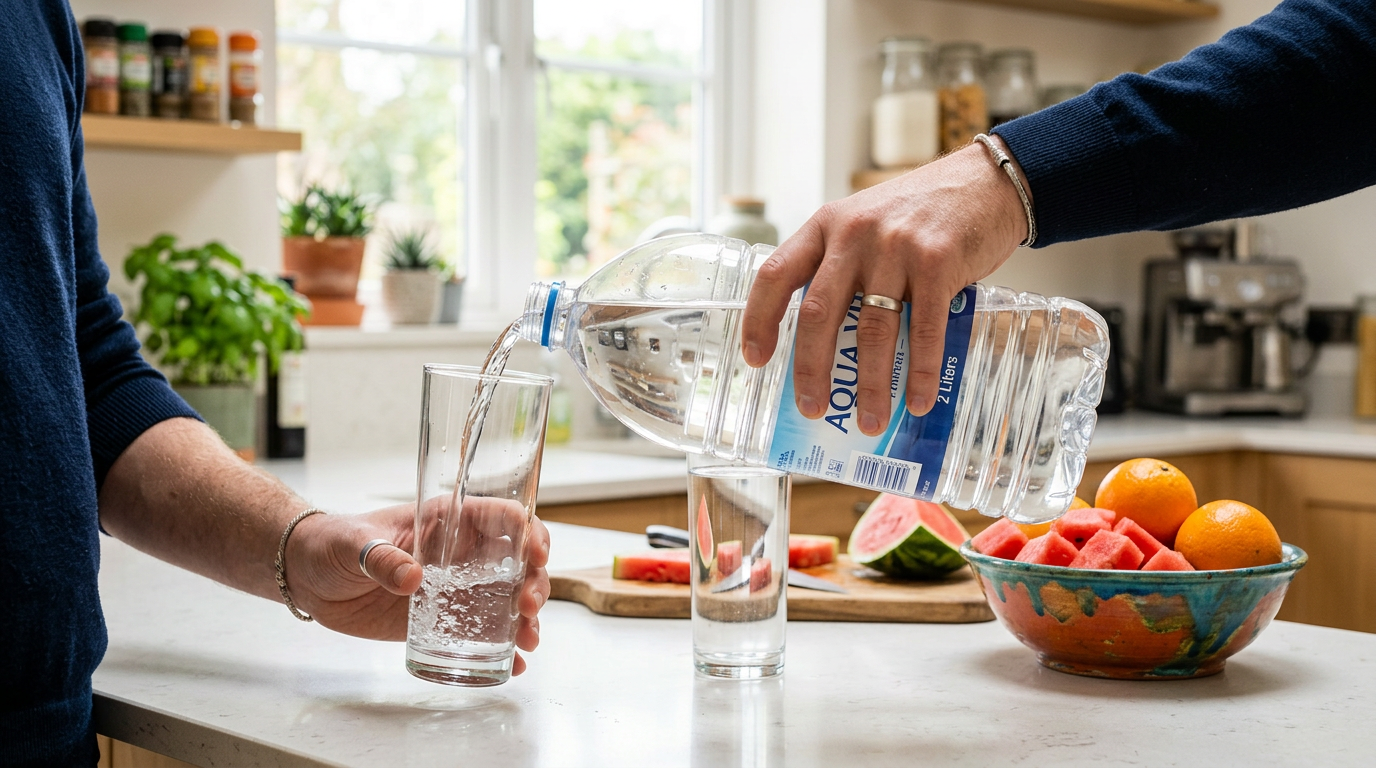

How much water should you drink each day? Eight glasses, one litre or perhaps three? Nephrology specialists warn that universal hydration advice is often little more than noise. In an interview, Dr Elien Mahieu explains why thirst is the best indicator and why the obsession with “two litres” may actually pose a risk to the kidneys.
(Editorial team: Belgium / Health & Lifestyle)
Few ideas are as firmly rooted in the public mind as the rule of drinking two litres of water a day. We hear it everywhere: in advertisements, magazines, office conversations and our grandparents’ stories. Tired? Drink water. Have a headache? Drink water. Dry skin? More water. It seems to be the universal answer to almost every problem.
Yet a visit to a nephrologist, a specialist in kidney health, reveals that hydration advice is far more nuanced. According to Dr Elien Mahieu of AZ Glorieux, “There is a lot of advice about drinking and staying healthy. Perhaps we are too preoccupied with it.” She asks a sensible question: “Do we really need to walk around carrying enormous bottles?”
Why the kidneys do not need “two litres”
According to the doctor, the two-litre-a-day rule is an oversimplification. Water needs vary greatly with age, weight, physical activity, ambient temperature and diet. Someone who eats plenty of fruit and vegetables, which contain a lot of water, needs less fluid from drinks. A 100-kilogram man working in construction also has different needs from a 50-kilogram woman working in an office.
Dr Mahieu explains that the kidneys are the body’s “managers” of fluid balance. They continually adjust the amount of water excreted in urine to maintain optimal levels of salt and other electrolytes in the blood. When you drink too little, urine becomes more concentrated and the kidneys work harder. When you drink too much, the excess is simply eliminated. There is no magical reservoir in which surplus water is stored for dry days.
The danger of forced drinking
An important point often overlooked is that forcing yourself to drink water can have serious medical consequences. In extreme cases, excessive water intake can cause hyponatraemia — a dangerous dilution of sodium in the blood. Symptoms can include nausea, headaches, confusion and lethargy; severe cases may lead to seizures or coma.
Hyponatraemia is rare in healthy people, but it can affect endurance athletes who drink large amounts of plain water without replacing the salts lost through sweating. In people with existing kidney or heart conditions, excessive fluid intake can also place extra strain on the heart and kidneys.
What does thirst tell us?
Thirst remains the best guide. Our bodies have a finely tuned mechanism that signals when fluids are needed. Thirst occurs as the concentration of substances in the blood rises, prompting the brain to send a clear message: “drink water”. Ignoring this signal over the long term is harmful, but forcing yourself to drink when you are not thirsty is usually unnecessary.
There are, of course, exceptions. Older people have a less sensitive thirst mechanism and may become dehydrated without feeling thirsty. Athletes who lose large amounts of fluid through sweating, and people working in extreme heat, also need to make a conscious effort to drink.
Urine colour: a simple indicator
For anyone looking for a visual clue, urine colour can be a useful guide. Pale-yellow urine generally indicates adequate hydration. Dark, tea-coloured urine may suggest that you need to drink more. Completely clear urine, almost like water, may indicate excessive fluid intake.
Dr Mahieu also points out that not all drinks are alike. Sugary drinks, including fizzy soft drinks, and alcoholic beverages can have diuretic effects and increase water loss. Coffee, long blamed for dehydration, also contributes to fluid intake when consumed in moderation because of its high water content.
Conclusion
The end of the two-litre-a-day myth does not mean ignoring hydration. It means paying closer attention to your body’s actual needs. Listen to your thirst, observe your urine colour and take your circumstances into account. If you choose a soft drink, the nephrologist’s advice is simple: avoid the option with the highest sugar content and choose a healthier alternative that will not put your kidneys at risk over time. As always, balance is key.




Leave a Reply