
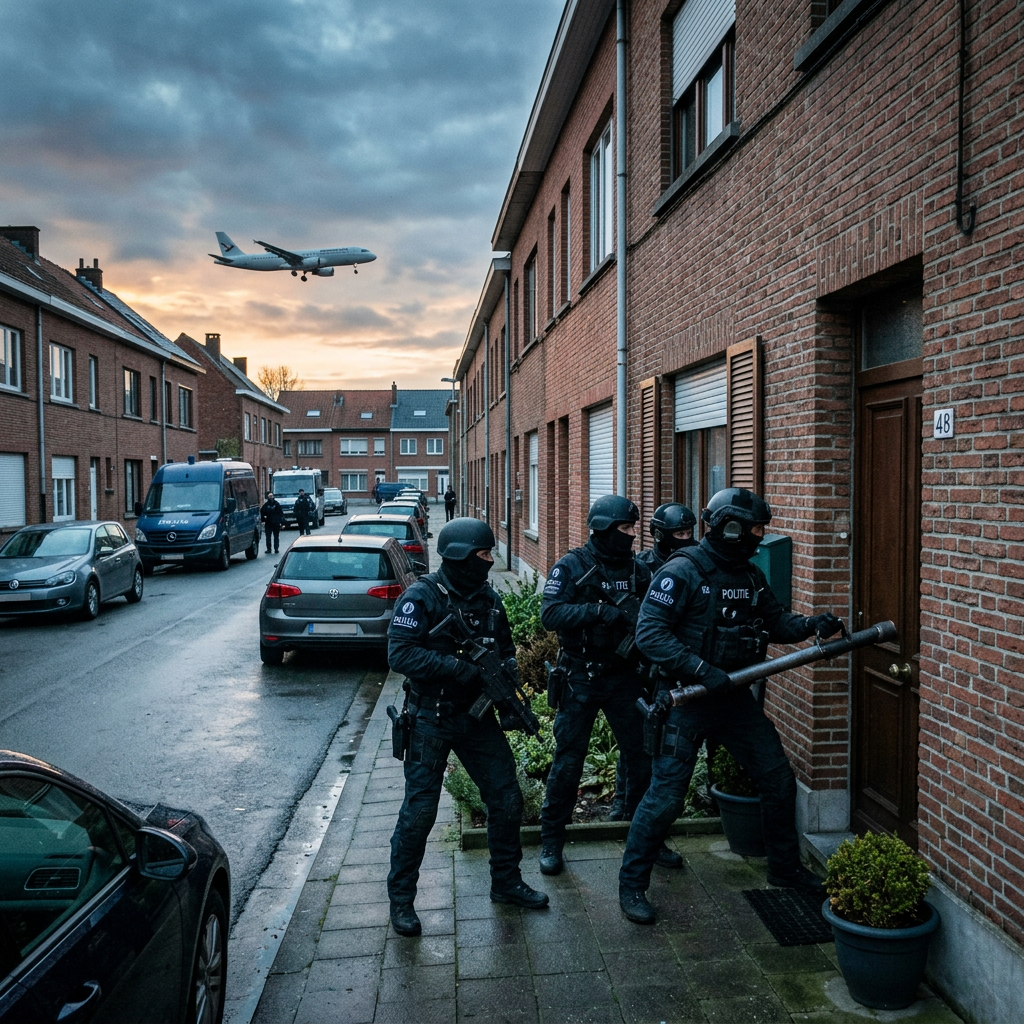

The Belgian Parliament gave the green light on the morning of Friday, 6 November 2026, to an unprecedented law allowing law-enforcement officers, under specific conditions, to enter private homes by force in order to detain people without legal residence who refuse to leave the country. Strongly backed by Asylum and Migration Minister Anneleen Van Bossuyt, the measure is intended to speed up removals. While the government describes it as a victory for public order, magistrates and lawyers are already announcing a challenge before the Constitutional Court.
(Editorial desk: Belgium / Politics & Migration)
After weeks of heated debate, protests in major cities and criticism from within the justice system, Belgium’s federal parliament passed the law granting police broader powers in dealing with people staying in the country unlawfully. The decision marks a shift in Belgian policy: the government intends to move from a primarily administrative approach towards a tougher return policy.
The law was strongly championed by the Minister for Asylum and Migration, Anneleen Van Bossuyt (N-VA). The initiative is a central part of the government’s strategy to increase the number of removals and enforce return decisions.
How will the law work in practice?
The image of masked officers breaking down a door may look like something from an action film, but the legislation sets strict conditions. Police will not be allowed to enter just any home at any time. The main conditions are as follows:
- People covered: The measure applies only to people considered a danger to public order or national security, for example, people convicted of rape, drug trafficking or incitement to hatred.
- Existing order to leave: The person must already have been issued an order to leave the territory in their name and have refused to comply with it.
- Judicial authorisation: Forced entry into a home requires authorisation from an investigating judge.
- Time window: Operations may take place only between 5:00 a.m. and 9:00 p.m., avoiding night-time interventions.
- Locksmith: If the door is not opened, police may call a locksmith to gain access.
- Children: The law prohibits the arrest of children but allows their parents to be arrested even when minors are present in the home.
Why is the law so controversial?
Despite being passed by parliament, the law remains highly controversial. Investigating judges and lawyers have described it as “unnecessary and vaguely worded”. They argue that existing legal tools were already sufficient and that the new law makes an already complex procedure even more cumbersome.
One of the main criticisms concerns the lack of a right to appeal. The person concerned would be unable to challenge the judge’s decision authorising entry into their home, raising serious questions about the protection of fundamental rights.
There is also considerable concern about the possible impact on children. Witnessing a forceful police intervention in their own home can have serious psychological consequences for children and may lead to families being abruptly separated.
Not all police officers are convinced either. Unions are concerned about officers’ safety: forcing entry into a home is a high-risk operation that can quickly escalate into violence.
Next step: the Constitutional Court
Even after its approval, the law’s future is far from certain. Opponents have announced that they will challenge it before the Constitutional Court. If the Court finds that the text violates the right to privacy or the principle of proportionality, it could annul the law.
Conclusion
Belgium has taken an important but risky step in its attempt to reform asylum and return policy. The possibility of forcibly entering certain homes is a direct response to public frustration over unlawful residence and associated crime. However, Minister Van Bossuyt’s political victory could turn into a legal battle if the courts find that fundamental rights have been violated. Police services will now have to prepare to implement a framework that changes the relationship between the state and people staying unlawfully on its territory.

Leave a Reply