
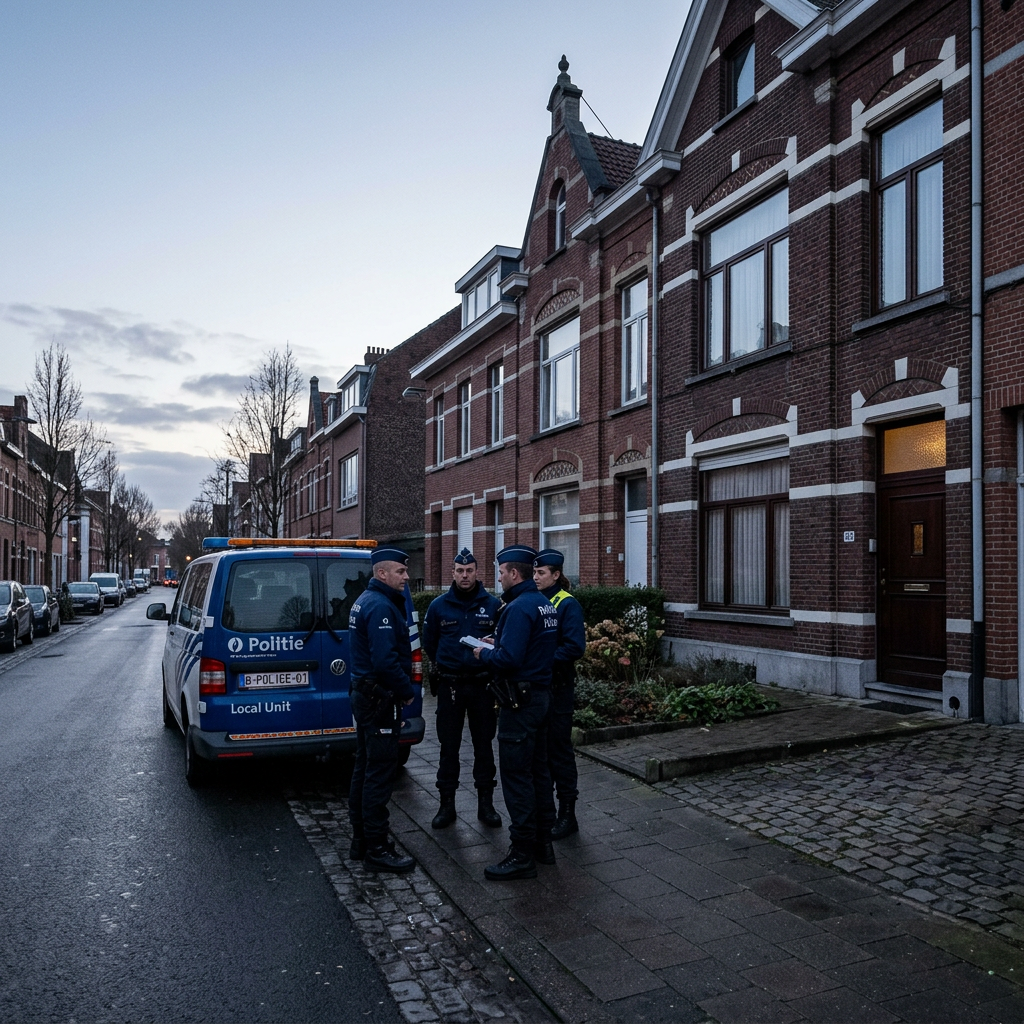

An unprecedented legislative initiative in Belgium is sparking a real political war. The police will be able to forcefully enter people’s homes without a residence permit, between 5:00 a.m. and 9:00 p.m., to arrest them for deportation. Although the government claims that the measure only targets dangerous criminals – such as rapists, drug dealers or hate inciters – magistrates, lawyers and civil society sound the alarm about the lack of clarity of the law and the devastating impact on children.
(Staff: Belgium / Politics & Justice)
Belgium is on the verge of a legislative change that could redefine the way the state interacts with people illegally on its territory. The House of Representatives is voting on a highly controversial bill on Thursday, aimed at giving the police increased powers to detain and expel illegal migrants considered a threat to public safety.
Although the initiative is part of the government program, she managed to bring thousands of people to the streets in several Belgian cities and united, against her, voices from the judicial system, lawyers and human rights organizations.
What does the law actually provide?
The legislative project introduces a series of strict rules, aimed at providing a legal framework for the detention of people who refuse to leave the country. According to the text, the police will be able to enter private homes, but only under certain conditions:
- Strict time interval: Intervention is only allowed between hours 5:00 am and 9:00 pm. .
- Clear targets: The measure concerns exclusively persons considered a threat to public order or national security.
- Refusal of expulsion: There must already be an expulsion order issued in the name of that person, which he refused to comply with.
- Judicial authority: Entry into the home requires the prior approval of an investigating judge.
- Force: If the door is not open, the police have the right to bring a locksmith to break it.
- Children: Although the law forbids the arrest of children based on this warrant, parents can be arrested even if the little ones are present in the house at that time.
The government, through the voice of the Minister of Migration, Anneleen van Bossuyt (N-VA), claims that the law is a necessary tool to remove the dangerous from society. “The goal is to deport dangerous people, including rapists, drug-related criminals and hate preachers,” the official said.
Criticisms: A “Useless and Vaguely Formulated” Law
Despite government arguments, the law is struck by a strong opposition. Investigative judges and lawyers consider the text to be useless and formulated ambiguously. They draw attention to the fact that the measure only complicates a procedure that could be managed through other legal instruments.
One of the most contested aspects is Lack of appeal right. The data subject (or his family) does not have the possibility to challenge the decision of the judge who authorizes entry into the home, which raises serious questions regarding the respect of fundamental rights.
There is also a deep concern about The impact on children. Even if they are not arrested, the sight of the parents taken by the police in the middle of the day, by force, can have devastating psychological consequences. Critics warn that the law could lead to brutal separation of families.
The cops aren’t completely pleased either. The representatives of the police unions have raised issues related to the safety of operations, as forcing the entry into people’s homes is a high-risk operation that can degenerate into violence.
Street protests and the future of the law
Thursday’s parliamentary debate takes place amid recent protests in several Belgian cities, where thousands of citizens have taken to the streets to express their opposition to this measure. They consider it a violation of privacy and an inhuman policy.
Although the law is expected to pass the vote of the Parliament, given the majority available to the government coalition, it will not be exempt from provocations. It is very likely that the law will be attacked at Constitutional Court, where the opponents hope that the judges will declare it unconstitutional.
Conclusion
Belgium faces a classic dilemma of modern democracies: how far can the state go to ensure its security without violating the fundamental rights of the individual? The law on forced entry into housing for the arrest of illegal migrants is a supreme test for the balance between public order and civil liberties. If it passes, it will be a strong signal for the whole of Europe. And if she is blocked in court, she will demonstrate that justice remains a shield against legislative abuses. The fact is that, regardless of the result, the Belgian society remains deeply divided on this topic.
P.S. — In the meantime, the Belgian Parliament passed the law in the early morning of 6 November 2026.




Leave a Reply