
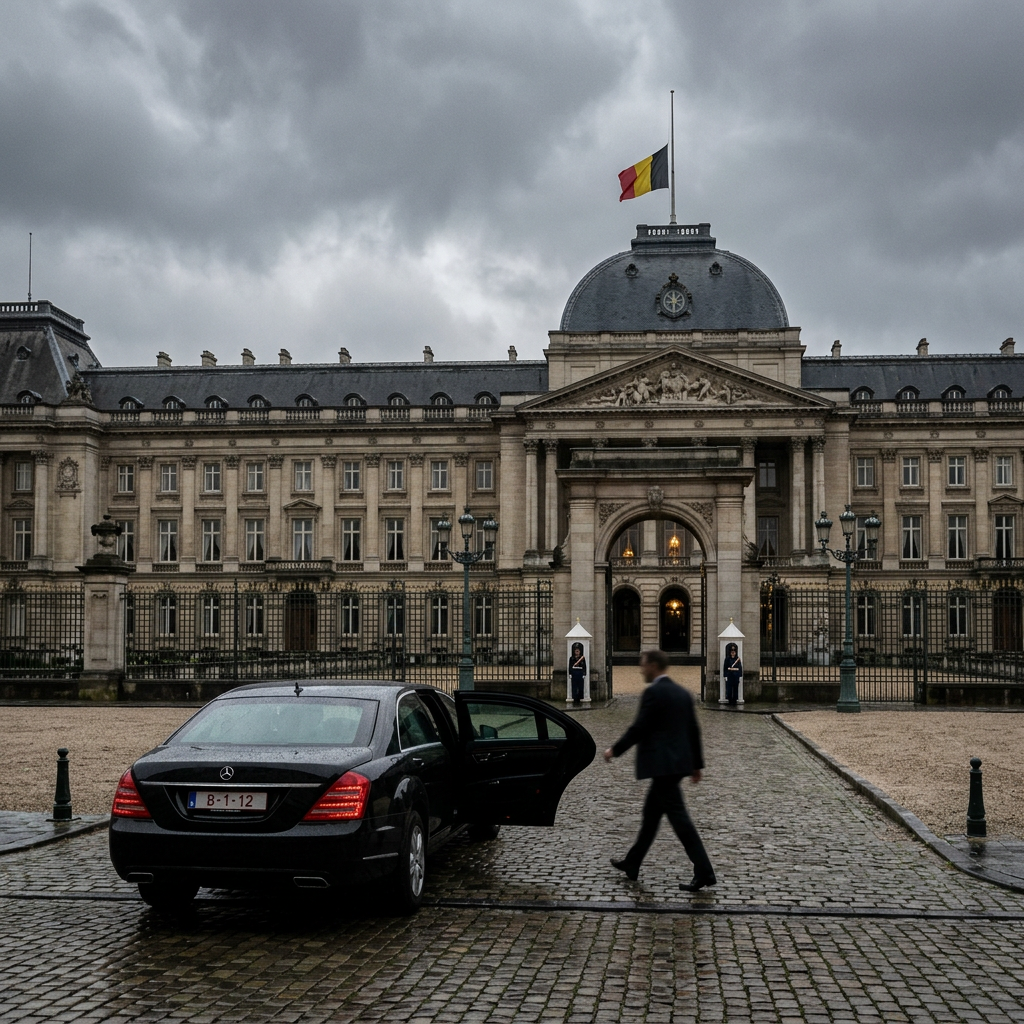

After a political crisis that appeared to be heading towards early elections, King Philippe refused to accept the prime minister’s resignation. The visit to the Palace ended with a royal ultimatum: all five parties in the coalition promised to make compromises, and De Wever has ten days to find the €10 billion needed to put the country’s public finances back on track.
(Staff: Belgium / Politics & Economy)
What seemed at the start of the week to be the end of Bart De Wever’s political career turned into a lesson in royal diplomacy on Friday. After a series of intensive consultations with the leaders of the five parties in the governing coalition, King Philippe announced that he was refusing to accept the prime minister’s resignation, giving him a new mandate to break the deadlock in the budget negotiations.
The monarch’s decision is unusual. It came after De Wever offered his resignation on Monday morning, following a marathon night of failed talks. The King chose not to plunge the country into an electoral crisis, instead putting pressure on the political class to find a solution.
The promise of the five parties
The Palace’s statement is unequivocal. King Philippe took note of the five party presidents’ “formal commitment” to make concessions and reach an agreement within the government. The monarch stressed “the importance of a proper balance between maintaining social cohesion and promoting economic growth”.
“Each party president has undertaken to put compromise and a sense of responsibility first in order to achieve this,” the statement quoted by the Belgian press says. In effect, the King told political leaders that excuses would not be accepted and that they must take responsibility for governing.
Ten days to save Belgium
The new deadline is 16 November. By then, Bart De Wever must immediately resume the budget negotiations and submit a detailed report to the King. This ten-day extension is crucial to avoid a system of provisional monthly budget allocations (provisional twelfths), which would hold back public investment and send a negative signal to financial markets.
The stakes remain enormous: finding around €10 billion to prevent a spiral of public debt. The National Bank of Belgium has already warned that, without structural reforms, interest payments will become an unbearable burden in the years ahead.
Tensions remain high
Although the King managed to bring everyone to the same table, the underlying problems have not disappeared. The socialists of Vooruit continue to demand that those with the broadest shoulders (the wealthiest) contribute more through taxation, while the liberals of MR categorically reject any tax increases. This ideological confrontation was the main reason for last week’s deadlock.
Each of the five parties is now under pressure from public opinion. If they fail again, they will show that they are unable to govern, and the King may have to accept the resignation and call early elections.
Conclusion
King Philippe’s decision is an act of political balance and constitutional responsibility. By refusing to accept the resignation, he has avoided a major institutional crisis, but has placed responsibility squarely on the parties. Bart De Wever now has a chance to prove that he is a skilled negotiator. With such a short deadline and such entrenched positions, however, the next ten days will be a decisive test for Belgium’s future. It remains to be seen whether the reassuring words from the Palace will be translated into action at the negotiating table.




Leave a Reply