
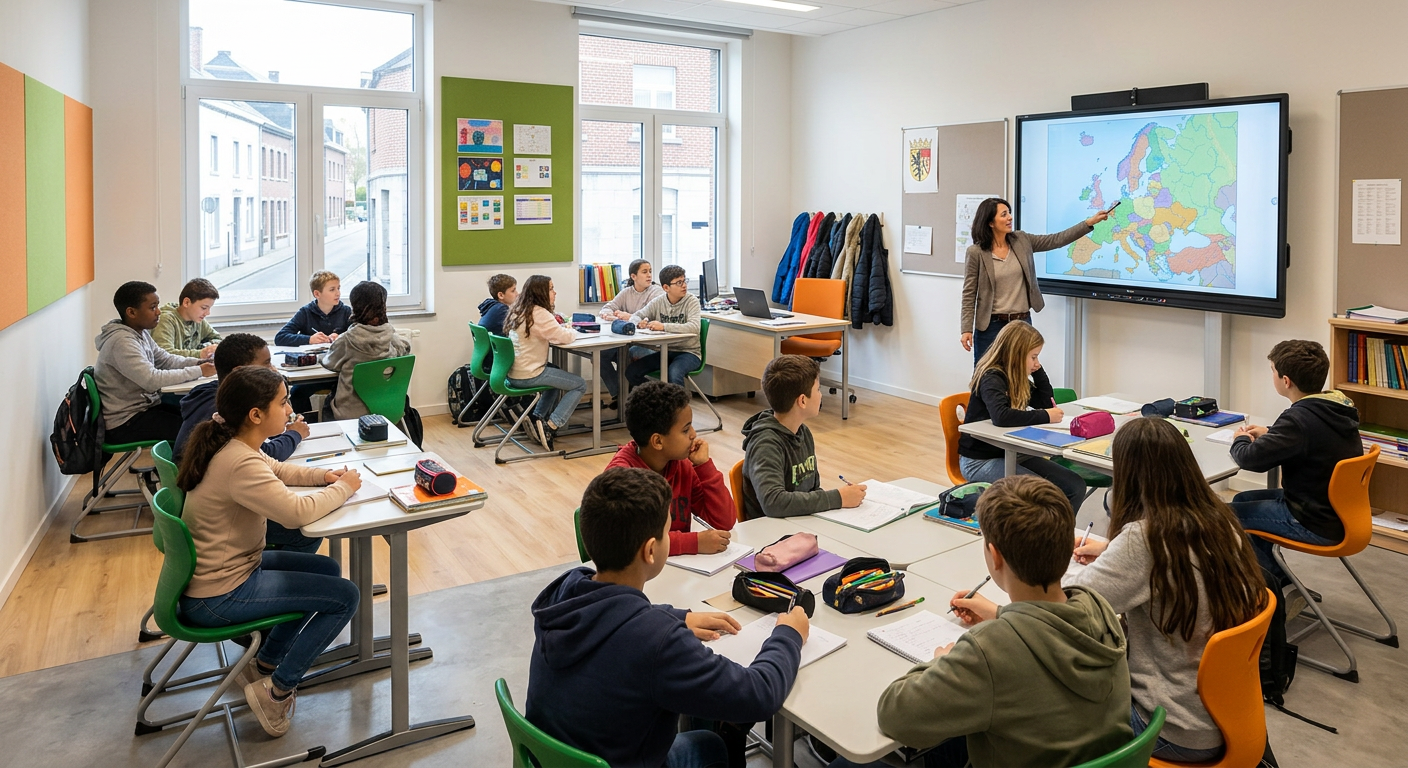

Although we instinctively associate German with Germany and Munich’s beer culture, it is an official language in six European countries. From Swiss dialects that can be difficult even for German visitors to understand to Belgium’s nine German-speaking municipalities, Europe’s linguistic map is far more fascinating than it may first appear.
(Editorial staff: Europe / Culture & Linguistics)
When we think of German, we may picture Berlin’s streets, Bavarian beer culture or Austria’s railway carriages. German has the largest number of native speakers in the European Union and is an important language of Western scholarship, philosophy and business. Yet its reach extends well beyond Germany and Austria, adapting to local histories and cultures and creating distinctive linguistic communities.
Here are the six European states where German has official status, along with some of the linguistic features that make each one distinctive.
Switzerland: four national languages
It is no surprise that German is widely spoken in Switzerland, but everyday language use is complex. The country has four national languages: German, French, Italian and Romansh. German is the most widely spoken. In daily conversation, many Swiss German speakers use regional dialects collectively known as Swiss German (Schweizerdeutsch or Schwyzerdütsch), rather than Standard German (Hochdeutsch).
These dialects can differ substantially from Standard German, making conversations challenging for visitors from Germany. Standard German is commonly used in writing, education and formal media, while Swiss German dialects dominate many everyday conversations. This coexistence of varieties is a notable feature of Swiss linguistic identity.
Belgium: German between French and Dutch
Belgium is known for its Dutch-speaking Flemish community and its French-speaking communities, but it also has an official German-speaking Community.
It is located in eastern Belgium, in nine municipalities near the German border, an area often associated with the East Cantons (Ostkantone). German is used in public administration and education for a community of around 77,000 people. Despite the proximity of Germany, the community has a strong Belgian identity—a reminder that language does not determine citizenship or national belonging.
Luxembourg: a country of three languages
The Grand Duchy of Luxembourg uses Luxembourgish, French and German in public life. Luxembourgish (Lëtzebuergesch) is the national language and is central to everyday communication, while German plays an important role in the media, administration and education. French is especially important in legislation and legal texts. Residents may move between all three languages depending on the setting.
Liechtenstein: a small German-speaking state
Nestled between Switzerland and Austria, Liechtenstein is the only sovereign state whose sole official language is German, although local people often speak Alemannic dialects in everyday life. Its roughly 39,000 inhabitants use a dialect closely related to those of Austria’s Vorarlberg region and neighbouring Switzerland. Language and tradition remain important parts of the country’s identity.
Germany and Austria: the language’s central hubs
Germany and Austria are central to the German-speaking world. Germany, with more than 80 million speakers, has considerable influence on standard German. Austria has its own national variety and vocabulary: for example, Erdapfel is commonly used for potato where many Germans say Kartoffel, and Paradeiser for tomato where others say Tomate. Such differences show how languages evolve with the history and geography of their speakers.
Conclusion
The fact that German has official status in six European countries illustrates how language and identity cross political borders. Centuries of changing frontiers have not stopped languages from spreading or communities from preserving distinctive traditions. Whether it is a Swiss speaker maintaining a local dialect, a German-speaking Belgian in Eupen or a Luxembourger switching between three languages at work, Europe remains a rich linguistic mosaic. German, with its many regional forms, is one of the threads that help weave it together.



Leave a Reply