
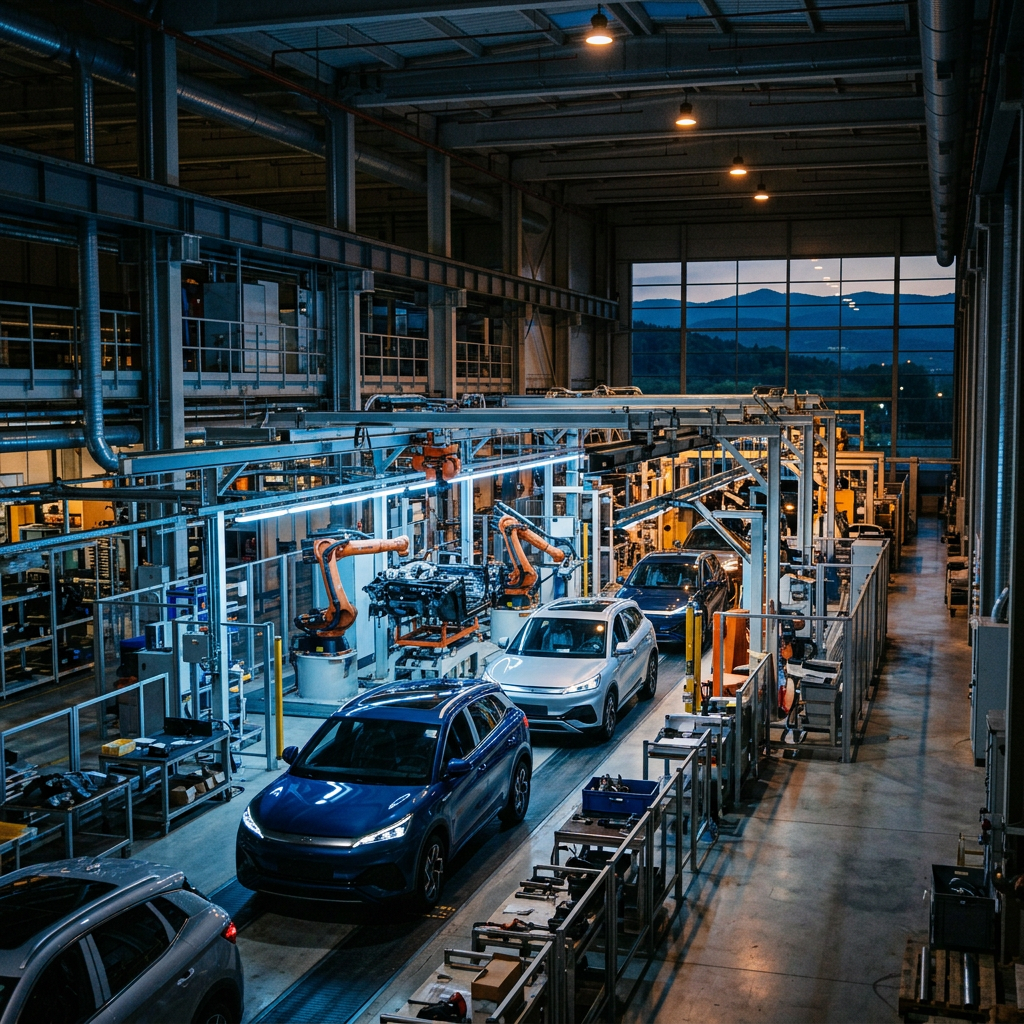

While Romania is still lamenting the outlook for its car industry after Dacia shifted the electric future of the Sandero to Morocco, neighbouring Bulgaria has scored a major industrial win. Chinese automotive giant Great Wall Motor has chosen Lovech for its first European production base, where it plans to build a direct competitor to European models. The decision offers a stark lesson in attracting strategic investment—not merely in losing it.
(Staff: Bulgaria, China & Romania / Automotive & Economy)
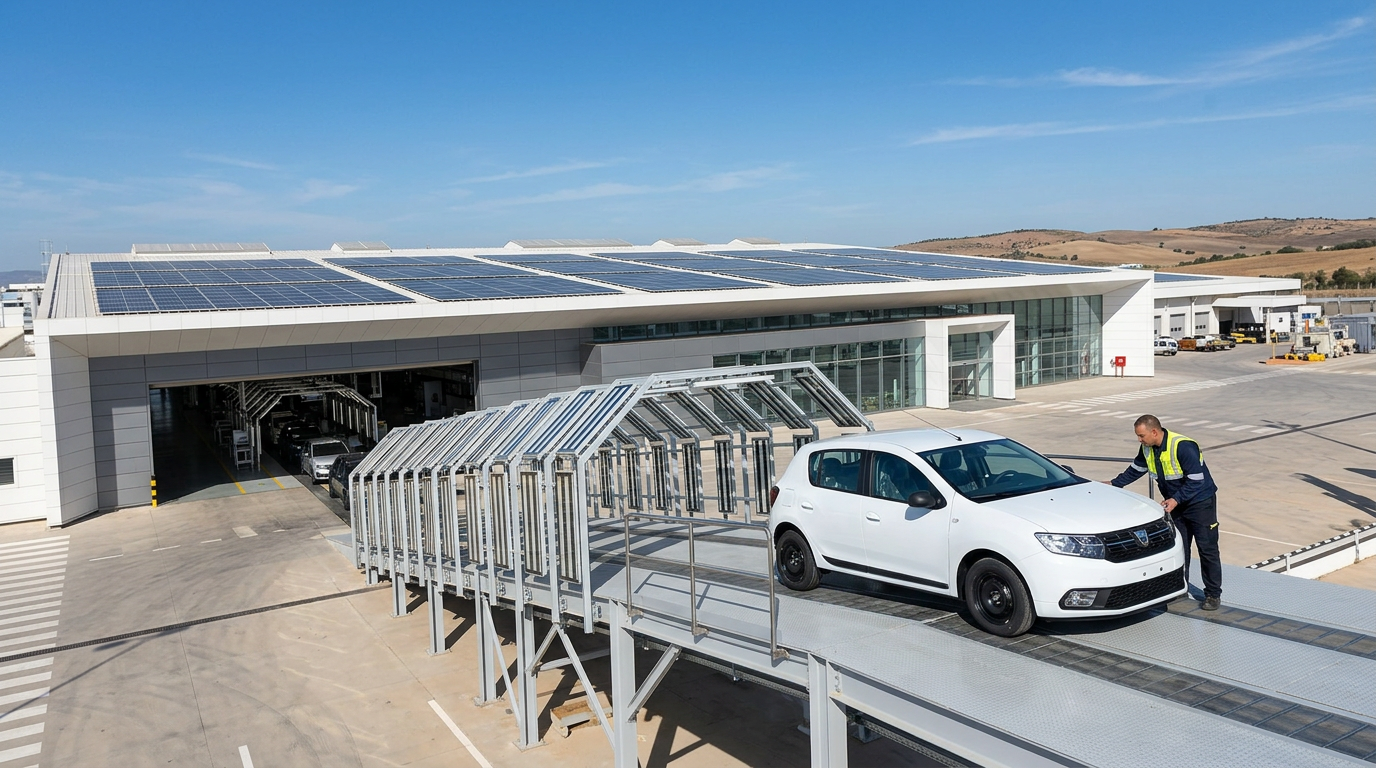
For Romania, recent weeks have brought disappointing news for the automotive industry. Renault Group has announced that the next electric generation of the Sandero will be built at its plant in Tangier, Morocco, leaving the Mioveni factory facing greater strategic uncertainty. While Romanian officials seek ways to keep Mioveni relevant, Bulgaria is developing a new automotive future just a few kilometres south of the border.
Great Wall Motor chooses Bulgaria
Chinese manufacturer Great Wall Motor (GWM) announced on 27 October 2026 that production of its compact Ora 5 SUV is due to begin in Bulgaria in the first quarter of 2027. It will be the company’s first production base in Europe, marking a major strategic step as the Chinese manufacturer seeks to re-establish itself on the continent.
The factory will be operated in partnership with local company Bulgaria Automotive Industry (BAI), which owns a production facility in Bahovitsa, near Lovech. The choice is not accidental: BAI has worked with GWM before, assembling the Steed pickup and Haval H6 SUV. The planned production capacity is 50,000 vehicles a year.
Why Bulgaria rather than Romania?
GWM’s decision to invest in Bulgaria rather than other countries in the region, including Romania, reflects several key factors. First, GWM already has an established business relationship with local partner BAI, reducing risk and speeding up implementation. Second, Bulgaria offers lower operating costs, including labour and energy, than some other EU markets.
The most significant factor, however, concerns European Union trade rules. Chinese-made electric vehicles are subject to an anti-subsidy duty of 20.7%, in addition to the standard 10% customs tariff. By moving production inside the EU, GWM can avoid these import duties on vehicles manufactured locally and compete more effectively on price.
What is the GWM Ora 5?
The Ora 5 is a compact SUV developed with the European market in mind. Its styling recalls small, rounded city cars, while its length of 4.447 metres places it in the C-SUV segment. The model is offered with three powertrain options: electric, hybrid and petrol.
- Electric version: 204 horsepower and a 58.3 kWh battery, with a stated range of about 435 km.
- Hybrid version: The full-hybrid system produces 223 horsepower and is said to offer a total range of up to 1,000 km.
- Petrol version: A 1.5-litre turbocharged engine producing 160 horsepower.
Prices announced for Europe are competitive. In Germany, the petrol version starts at €26,990, while the hybrid starts at €28,990. In Italy, the launch price is reported to be lower, at around €25,000. These figures could make the Ora 5 a serious competitor to established European models and to upcoming affordable electric cars.
GWM’s ambitious plans for Europe
Production in Lovech is not an end in itself, but the beginning of a broader strategy. Great Wall Motor aims to produce 300,000 vehicles in Europe by 2029 and achieve a market share of 3% to 5% by 2030.
To support those ambitions, GWM is preparing to launch at least 10 new models over the next two years, expanding its range beyond electric vehicles. The company already operates a research and development centre in Munich, Germany, opened in 2021, where it adapts products to European requirements and regulations.
Conclusion
As Romania faces growing uncertainty about the future of its automotive industry, Bulgaria has attracted a major strategic investor by offering conditions for expansion within the European single market. GWM’s plan to build the Ora 5 in Lovech is welcome news for the Bulgarian economy and a warning sign for Bucharest. In the global competition for investment in green technologies, Romania risks falling behind unless it can offer a predictable business environment, competitive costs and a clear long-term vision for its car industry. For now, Bulgaria’s neighbours to the south of the Danube are celebrating, while Mioveni’s future looks less certain.



Leave a Reply