

Hadija Amajoud had been teaching since 2022 at Kiempunt Campus Assenede, a provincial special-education primary school. Although she had a permanent position and had never received a negative evaluation, the Province of East Flanders dismissed her after she refused to comply with new neutrality rules banning visible religious symbols. It is the first case of its kind in Flanders.
(Staff: Belgium / Education & Society)
The Province of East Flanders decided, following disciplinary proceedings, to dismiss Hadija Amajoud, who had taught since 1 September 2022 at Kiempunt Campus Assenede, a provincial special-education primary school. The reason was her refusal to comply with regulations banning visible religious symbols in the workplace.
What happened?
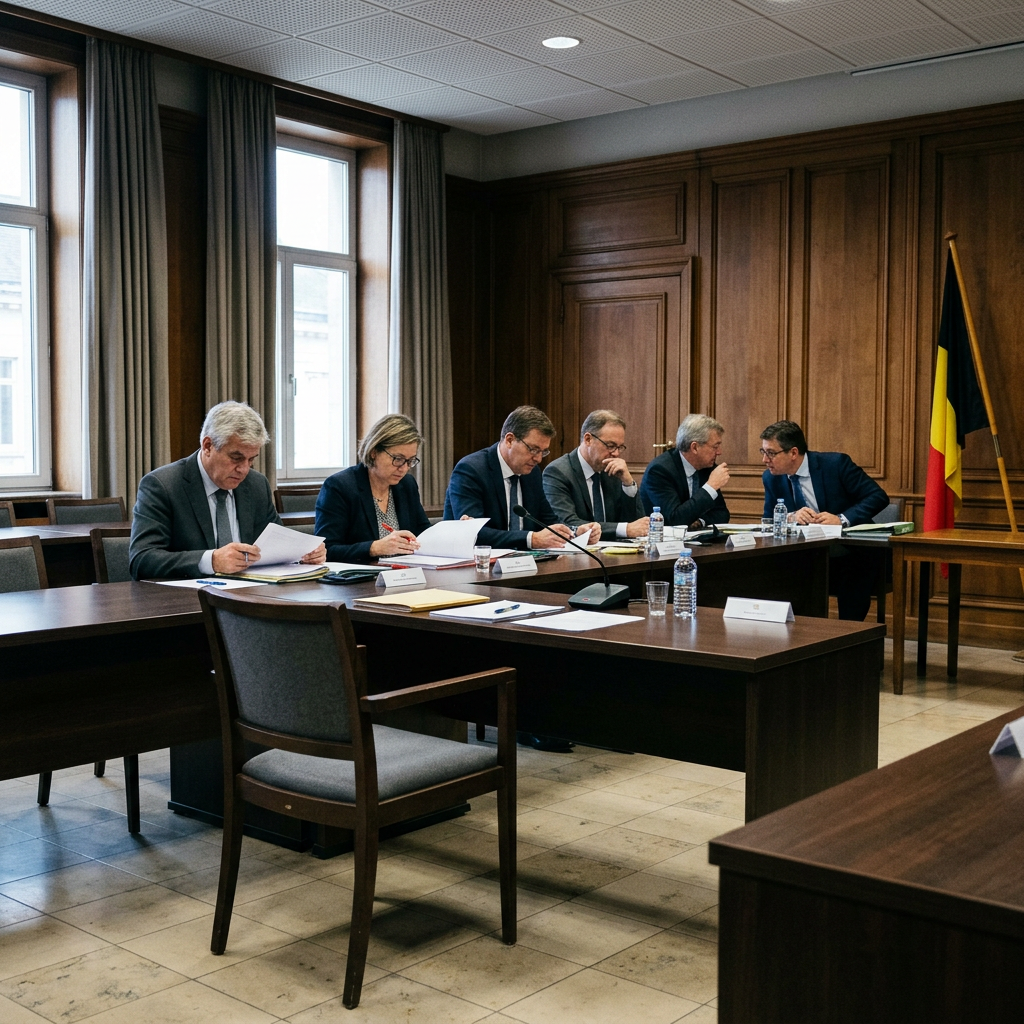
Hadija Amajoud wore a headscarf when she began teaching at the school in Assenede. On 27 June 2024, the province amended its staff regulations, and from 1 September 2024 an explicit ban on visible religious and philosophical symbols came into force, except for teachers of religion or philosophical subjects. Amajoud refused to comply, saying she could not teach without her headscarf. After several discussions and procedures, she appeared before the provincial disciplinary committee on 3 September 2026, which decided to dismiss her.
The teacher’s reaction
Hadija Amajoud reacted strongly to the decision: “I am losing not only my job, but also my income, security and permanent position. Everything I had built has suddenly been shattered.” She explained that she had obtained permanent status on 1 January 2024, speaks Dutch well and had never received a negative evaluation. “I tell my pupils every day that they can be themselves. How can I continue to provide quality education if I tell them that everyone is welcome, but I am not allowed to be myself?” she told VRT NWS.
Amajoud considers the province’s interpretation of neutrality “purely political” and asks “how far an employer can go in limiting a teacher’s personal freedom.” She was supported by several sympathisers outside the provincial government building in Ghent two weeks before the decision.
The province’s position: “Rules are rules”
Provincial first deputy Kurt Moens (N-VA) defended the decision: “As a deputation, we are obliged to comply with democratically approved staff regulations.” He referred to the Constitution and the principle of state neutrality. The regulation applies to all employees in provincial schools and bans “signs, symbols or clothing expressing a political or religious belief.”
The union challenges the decision
The socialist union ACOD announced that it would challenge the dismissal before the Brussels Appeals Chamber, using the procedure provided by law. “We will oppose this as strongly as possible,” said Kristof Bruyland, an ACOD representative. He believes the decision sets a dangerous precedent. Union representatives argue that this amounts to a “personal regulation”, rather than merely applying a general rule.
A broader context: the debate over neutrality and the teacher shortage
The case of Hadija Amajoud is part of a broader debate in Flanders. On the one hand, the Province of East Flanders has also extended neutrality rules to pupils, while other schools in other education networks have similar regulations. On the other hand, there is an acute teacher shortage. “At a time when teachers are in short supply, we should think about how we want to define the notion of ‘neutrality’,” Amajoud said. “No one is truly neutral. Every teacher enters the classroom with their own beliefs.”
Conclusion
According to Belgian media, Hadija Amajoud’s dismissal is the first case in Flanders in which a teacher has been explicitly dismissed for wearing a headscarf. The case has sparked strong reactions and raises fundamental questions about the boundaries of neutrality in education, freedom of religious expression in the workplace, and how these principles can be reconciled with the need for teachers in an education system under pressure. The next step is the Brussels Appeals Chamber, where the union hopes to have the decision overturned.





Leave a Reply