
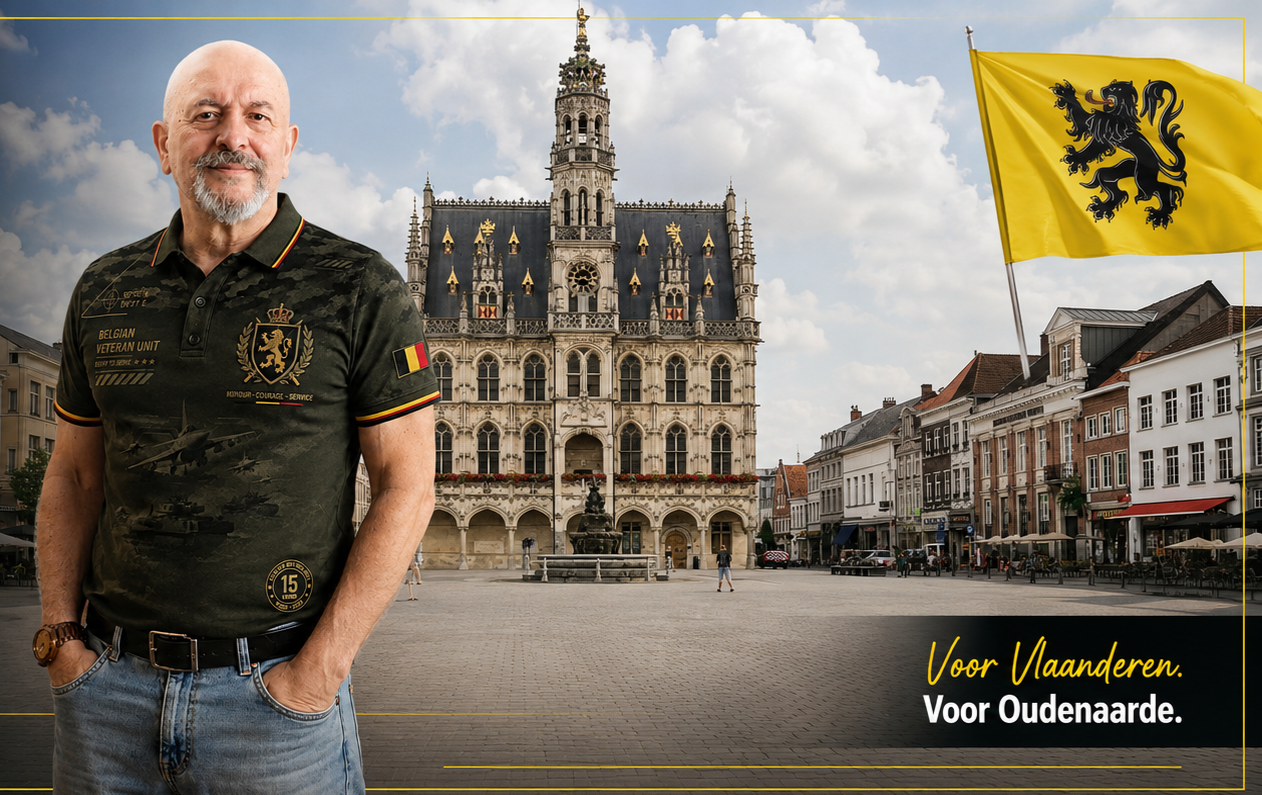

There must be no war between human creativity and artificial intelligence, but a dialogue: for a Europe that protects artists’ rights without limiting the freedom to create
Editorial by Cristin Tomeci
I was proud to receive an invitation to contribute to the European Commission’s debate on the future of artificial intelligence in culture and the creative industries.

For me, this invitation is not merely a formality or a simple opportunity to fill in a European form. It is an opportunity, after more than fifty years in the world of music and culture, to explain how I see this transformation that is already taking place before our eyes.
I was invited by PlayRight, the Belgian organisation that represents and manages the related rights of performers, to contribute to this debate. The fact that the voice of an artist and cultural professional can become part of a European reflection on future legislation concerning artificial intelligence seems important to me.
AI is talked about a great deal. Sometimes, however, people who know it more from the news than from actually using it are the ones talking about it.
I do not believe that artificial intelligence is our enemy.
I believe it is a natural stage in the development of humanity.
Man does not disappear. What changes is what man can do.
A few centuries ago, the Industrial Revolution caused the same fears we hear today about artificial intelligence. Machines were going to change the way people worked, and people feared they would become useless.
But machines did not make people useless. They changed what people could do.
I think the same thing is happening now.
AI should not be seen only as a machine that replaces people, but as a tool that can expand human capabilities. Obviously, those who refuse to learn and adapt will encounter difficulties. But that does not mean artificial intelligence must be stopped.
It means we have to learn how to use it.
For an artist, AI can be a new form of freedom
I have been active in music for more than fifty years. I was and remain a composer and musician. I grew up on stage and organised hundreds of concerts in Europe and beyond.
I know very well the difference between an artistic idea and the technical possibility of turning it into a work.
Sometimes an artist has the idea but does not have all the means to bring it to life.
AI can help here.
For an artist, AI can become what the piano, guitar, synthesizer, recording studio or computer were in other eras: a new tool that makes it possible to do things that were once impossible or extremely difficult to achieve.
This possibility becomes even more important when we talk about people with disabilities.
When technology gives a person the opportunity to express their imagination
I have raised five children. My youngest daughter has Down syndrome.
I have seen first-hand how much a person can achieve when society gives them the opportunity to develop and participate.
My daughter grew up in Flemish society and is very familiar with technology. She uses computers and mobile phones, travels, reads and writes. At the same time, she has outstanding artistic talents. She danced for years, studied music at the academy, plays the piano and guitar, learned to play the drums and is a very good drummer.
She has imagination. She has ideas. She has creativity.
But there is sometimes an enormous distance between what she can imagine and what she can technically achieve.
AI can help reduce that distance.
That is why, when we discuss the regulation of AI in culture, we should not talk only about rights, money and industry. We should also talk about access, inclusion and freedom of expression for those who, until yesterday, did not have all the tools necessary to create.
For some people, AI does not mean replacing the artist.
It means, for the first time, having the possibility of becoming the artist they imagined themselves to be.
Learning is not stealing
One of the major controversies surrounding artificial intelligence is that AI systems learn from existing creations.
But isn’t that how people learn?
I grew up listening to music. We listened to Janis Joplin, Jimi Hendrix, Deep Purple, Led Zeppelin and entire generations of musicians. I was influenced by their sounds, their style, their instrumentation and their musical ideas.
That does not mean I copied a track.
An artist learns from what they hear, see and experience. They develop their own sensibility and then create.
Of course, there must be rules against copying and infringing rights. If someone actually reproduces another person’s work and presents it as their own, there is a legal problem.
But I do not believe Europe should turn every form of inspiration, learning or experimentation into an alleged violation of rights.
Justice can decide when a concrete infringement has occurred. Legislation must not presume in advance that any creative use of AI is suspicious.
Where do I see the real danger?
If you ask me what really concerns me about artificial intelligence, my answer is not music or the new art generated by AI.
I am concerned about using AI for war, mass destruction, manipulation, fraud, disinformation and other serious forms of abuse.
We must be very careful there.
That is where we need clear and enforceable rules.
But I do not think a musician who uses AI to create a piece should be regarded as a danger to society.
Europe must learn to distinguish between the creative tool and the dangerous use of technology.
And here is my question: Why don’t they ask us?
I worked as a statutory federal civil servant in the Federal Public Service of the Kingdom of Belgium and had contact with the process of digitalisation and new technologies.
I have also tried to develop ideas and projects through which people can learn to use AI.
That is why I think one of the most important mistakes Europe could make would be to build the future solely through rules written by people who look at technology from the outside.
There must be an ongoing dialogue with artists, musicians, developers, researchers, teachers and real users of this technology.
Why don’t they ask us?
This is probably the question that most strongly motivated me to participate in this European consultation.
Europe does not have to choose between man and machine
I do not believe the future is a confrontation between people and artificial intelligence.
The future is collaboration between people and AI.
We need to teach people how to use this technology, just as we teach children to use the tools available to them responsibly.
AI will learn from us.
That is why we must pay attention to what we teach it.
We must not teach people to fear artificial intelligence. We must teach them to understand it.
We must not prohibit before we understand.
We must not protect culture from technology by isolating culture from technology.
We must protect Man, the Creator, Freedom of Expression and Real Rights, while allowing technology to open up new possibilities.
I am proud to have the opportunity to express my point of view in this European debate.
Because the future of European culture is now being written.
And I think it is important that, when the rules of this future are written, those who create, those who use technology and those who know from experience are also heard on what it means to turn an idea into a creation.
I do not choose between man and AI. I choose the man who knows how to use AI.
Cristin Tomeci

You can buy the latest albums on CD or vinyl, featuring music by Cristin Tomeci and Ingrid Star, from the artist’s store by clicking here. You can also find their music on all major international streaming and online sales platforms by simply searching for the artist’s name.

Leave a Reply