
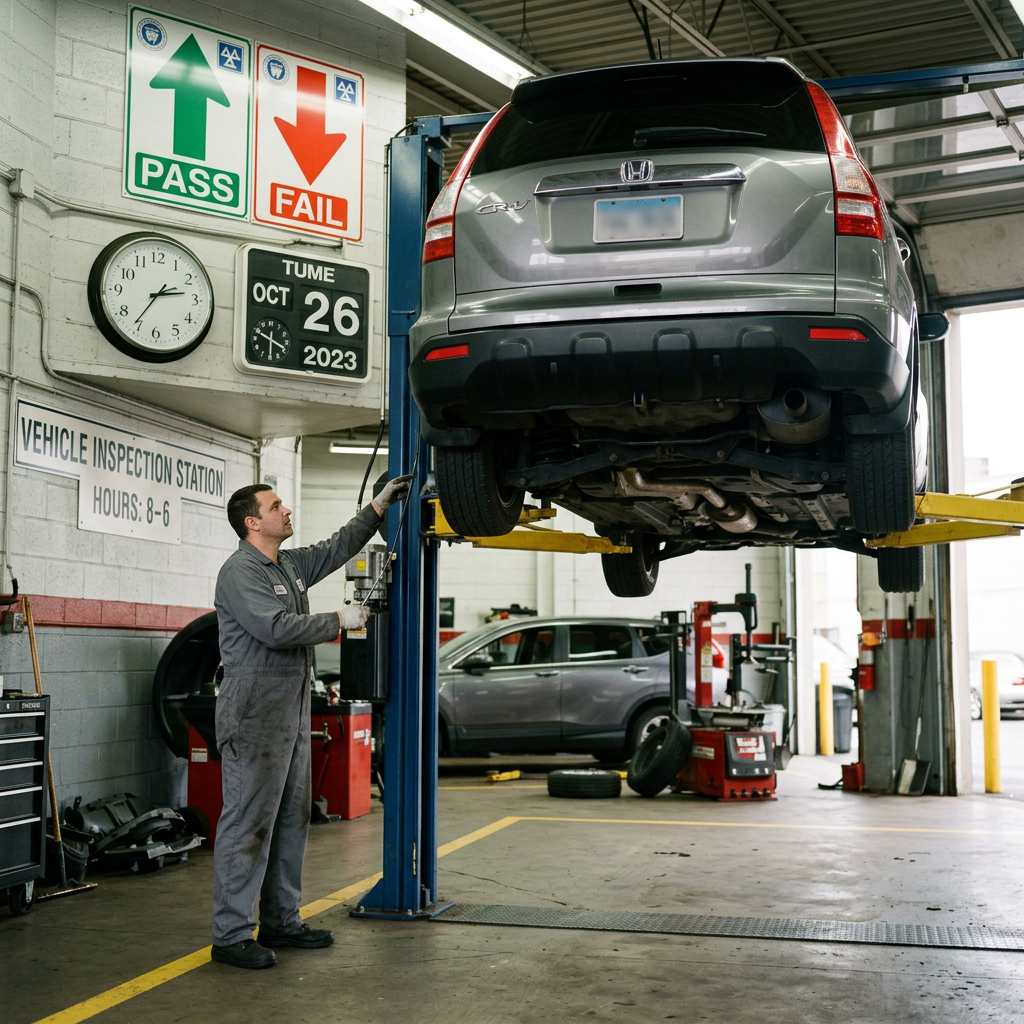

From September 1, 2026, the Technical Inspection for Cars in Flanders will be valid for two years, regardless of the age of the vehicle. At the same time, controls for tow trailers are removed and the certificate for serious malfunctions is extended to two months. Starting in 2027, the technical inspection for the sale of a second-hand car in Belgium will be completely abolished – a decision that provokes vehement reactions.
(Staff: Belgium / Mobility & Transport)
Major changes for the technical inspection in Flanders
Starting September 1, 2026, cars registered in Flanders will receive a Technical inspection certificate valid for two years, regardless of the age or mileage of the vehicle. This change, confirmed by the Flemish authorities, introduces a uniform system for all cars, eliminating previous differences based on seniority.
The measure comes with a number of other important changes, affecting both procedures and compliance deadlines.
What changes in practice?
- Inspection certificate valid for 2 years: All cars that pass the inspection from September 1, 2026 receive a certificate with a validity of 24 months.
- The rule does not apply retroactively: If the current certificate expires before September 1, 2026, the new certificate will only be valid for one year. Those who postpone the inspection to benefit from the two-year period will gain nothing – the validity of two years applies strictly from September 1, 2026.
- No certificate for minor breakdowns: The 3-month temporary certificate for administrative faults disappears. In its place, the vehicle receives a certificate with normal validity, but the missing documents must be submitted later. Non-compliance attracts fines.
- Longer term for serious breakdowns: For critical breakdowns (eg faulty brakes), owners now have at their disposal Two months For the remedy, compared to only 15 days at present.
- Towing trailers and tow hooks: From September 1, the installation of a tow hook no longer requires separate inspection. Also, the certificate for vehicles equipped with a tow hook is valid for two years, compared to just one year before.
- No proof of insurance for inspection: It is no longer necessary to present the insurance certificate upon inspection, as it can be checked digitally. (Insurance remains, of course, mandatory.)
Rules differ by region – “Tourism of the Technical Inspection” appears
The changes apply exclusively in Flanders. In Wallonia and Brussels, the technical inspection remains valid for one year. Since owners can choose any Belgian inspection center, there is a risk that many drivers in Wallonia and Brussels will register their vehicles in Flanders in order to benefit from the longer shelf life. This phenomenon, called “Tourism of the Technical Inspection”, is already predictable by experts.
Joost Kaesemans from Touring Warn: “It is expected that many drivers will opt for the Flanders’ Inspection Center.” He advocates the standardization of the rules at the national level, to prevent the creation of a parallel system and the risk of distorting competition between inspection centers.
A Controversial Change: Eliminating Inspection to Sale a Used Car
The most contested change comes into effect at January 1, 2027: Mandatory technical inspection for the sale of a used car in Belgium will be completely removed. Exceptions are vehicles imported from abroad, which remain subject to control.
Kaesemans I’m harshly criticizing this decision: “Eliminating the sales inspection is a regrettable decision. The buyer of a used car needs a detailed picture of the actual condition of the vehicle. The current state may be very different from that recorded at the last inspection, which could date for almost two years.”
He advises buyers to request a Independent inspection of the vehicle before purchase, although it is no longer binding by law.
Background and implications
The changes come in the context of an increase in the number of registered vehicles and an increased pressure on the inspection centers. Expanding the shelf life to two years is meant to reduce waiting times and make the system more efficient. At the same time, the elimination of the sales inspection is seen as a step towards deregulation, but also as a road safety risk.
Conclusion
The new technical inspection system in Flanders brings clear benefits: fewer visits to the inspection center, longer deadlines for fixing faults and eliminating unnecessary formalities. However, the elimination of the inspection for the sale of second-hand cars generates major concerns about road safety and consumer protection. It remains to be seen whether the authorities will manage to manage the risk of “Tourism of the Technical Inspection” and whether the announced measures will not lead to a decrease in safety on Belgian roads.





Leave a Reply