
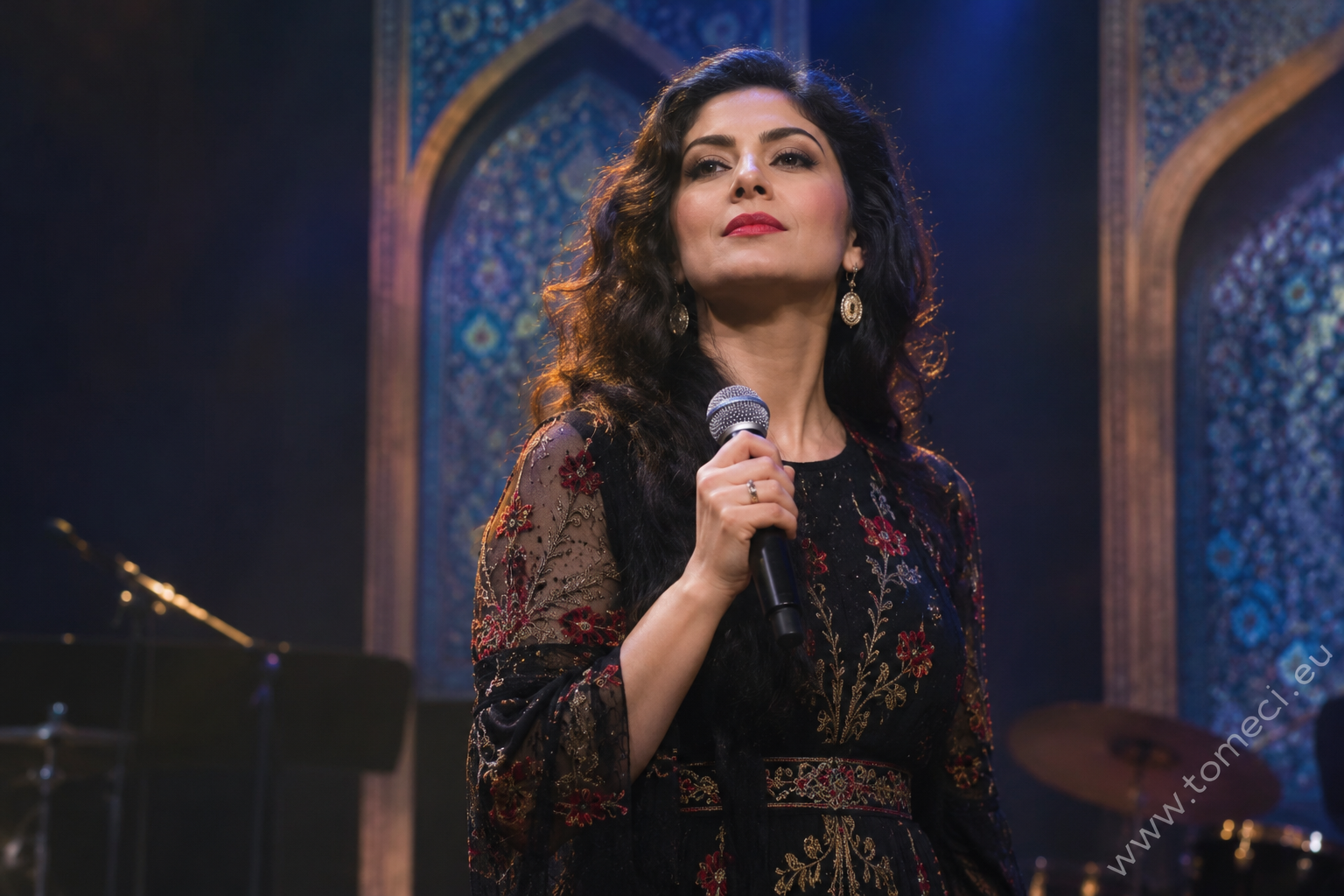
The punishment imposed on an artist and four other members of her team has renewed attention to the repression of freedom of expression and the restrictions placed on women in the Islamic Republic of Iran.

The case of Iranian singer Parastoo Ahmadi sparked outrage after the 74-lash sentence imposed on her was carried out on November 23, 2026.
The 29-year-old artist was punished over a concert recorded and published online in December 2024. In the video, Parastoo Ahmadi sang without a hijab alongside several musicians in a performance without an audience, staged in a traditional Iranian setting.
Four members of her team — musicians and production collaborators — received the same punishment: 74 lashes each.
A concert that became grounds for conviction
In Iran, women face severe restrictions on public appearances, clothing and musical performance. The requirement to wear the hijab has become a symbol of the authorities’ control over women’s lives.
Parastoo Ahmadi’s concert, streamed online, attracted millions of views. The artist appeared without the mandatory veil and performed songs in a show that became an act of defiance against restrictions imposed by the regime.
In June 2026, a court in Qom Province sentenced her to 74 lashes. The case concerned the production and online publication of content that authorities considered contrary to public decency and moral standards.
In addition to corporal punishment, those convicted were banned for two years from artistic and musical activities and from travelling abroad.
After appeals were rejected, the corporal punishment was carried out on November 23.
A punishment that goes beyond the case of one artist
Human rights organizations and representatives of the international community condemned the flogging, describing such penalties as cruel, inhuman and degrading treatment.
The Parastoo Ahmadi case is not isolated. In recent years, Iranian women have increasingly and visibly challenged compulsory dress rules. Artists who publicly express opposition expose themselves to legal and personal risks.
The death of Mahsa Amini in police custody in September 2022, after her arrest for an alleged violation of hijab rules, sparked widespread protests in Iran and many other countries.
Since then, women’s freedom, the right to expression and the authorities’ control over private life have remained central sources of tension in Iranian society.
Iran and the question of fundamental rights
The Islamic Republic of Iran is among the countries that use the death penalty on a very large scale. Executions, corporal punishments and restrictions on individual freedoms are regularly criticized by international human rights organizations.
The claim that 80% of executions worldwide take place in Iran cannot be presented as a verified statistic. Nevertheless, the scale of executions in the country remains a serious issue documented by organizations monitoring human rights.
The right to sing, choose and be free
Parastoo Ahmadi’s story is about more than a conviction. It raises fundamental questions about a woman’s right to choose what she wears, to sing, create and express herself without fear of corporal punishment.
An Iran in which citizens enjoy freedom, equality before the law and respect for fundamental rights would represent a major change for Iranian society.
Freedom should not depend on the approval of a political or religious regime. An artist’s voice should never be punished with lashes.




Leave a Reply