
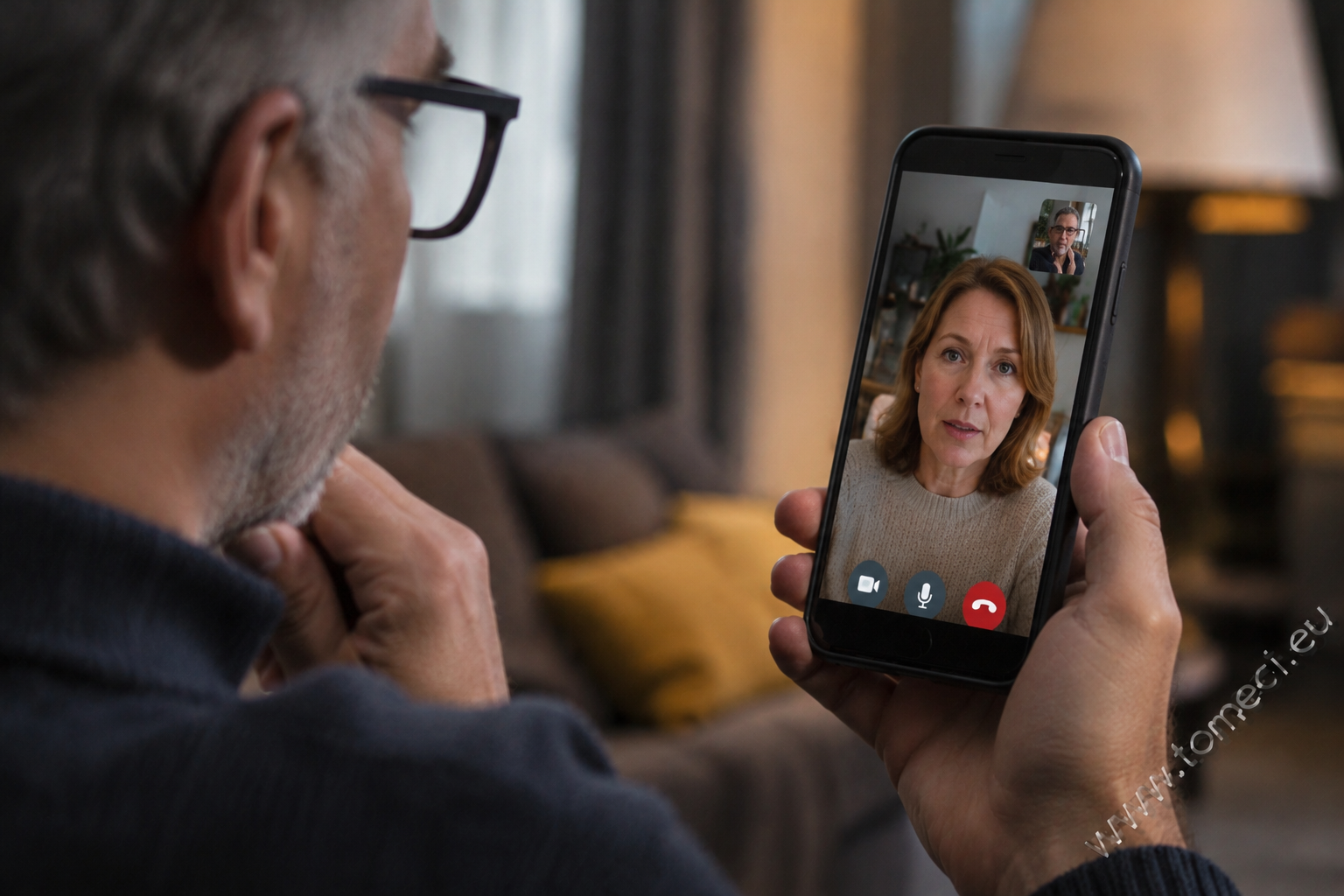
Artificial intelligence allows criminals to imitate the voices and faces of family members. A call that appears genuine can turn into an attempt at financial fraud.

(Editorial team: The Weekend Magazine)
Imagine this situation: you receive a call from your son, daughter or grandchild. The voice sounds exactly the same, the person seems frightened and tells you they have had an accident, are in trouble or urgently need money.
They ask you to make an immediate transfer and may even beg you not to tell anyone.
You might believe it is a genuine emergency. But you could be speaking to a criminal using artificial intelligence to impersonate someone close to you.
How does this scam work?
Using artificial-intelligence software, criminals can recreate a person’s voice from audio or video recordings available on the internet and social media.
Belgian police warn that some tools can clone a voice from very short audio samples. The technology can also create fake videos in which a person’s face appears to speak in real time.
Scammers can therefore pretend to be a family member, a friend, a doctor or even a representative of an institution.
The goal is almost always the same: to cause fear, create a sense of urgency and pressure the victim into sending money or revealing confidential information.
How can you protect yourself?
Follow a few simple rules:
- Do not send money immediately. No matter how desperate the situation seems, take a moment to verify it.
- End the call and phone the person back using the number already saved in your contacts.
- Agree on a secret family passphrase, known to your relatives, to verify emergencies.
- Never share passwords, banking codes or card details.
- Do not install apps or open links sent during a suspicious call.
- If the person does not answer, contact another family member to check what is happening.
Do not rely on the image or voice alone. Some imitations are so convincing that they can be difficult to recognise.
What should you do if you have already been scammed?
Contact your bank immediately and ask it to block or recall the transfer, if this is still possible. Keep messages, phone numbers and any other evidence, then report the incident to the police.
In Belgium, you can forward suspicious messages to: suspicious@safeonweb.be.
A rule every family should know
Talk to your parents, children and grandparents about this danger. Agree on a family safety passphrase and make sure no urgent request for money is acted on without verification through another channel.
Remember: recognising someone’s voice or face no longer guarantees that you are really speaking to that person. Two minutes of verification could save you from losing your life savings.
Share this warning with your family and friends. This information could help prevent a scam.

THE WEEKEND MAGAZINE – A Tomeci Press Publication



Leave a Reply