
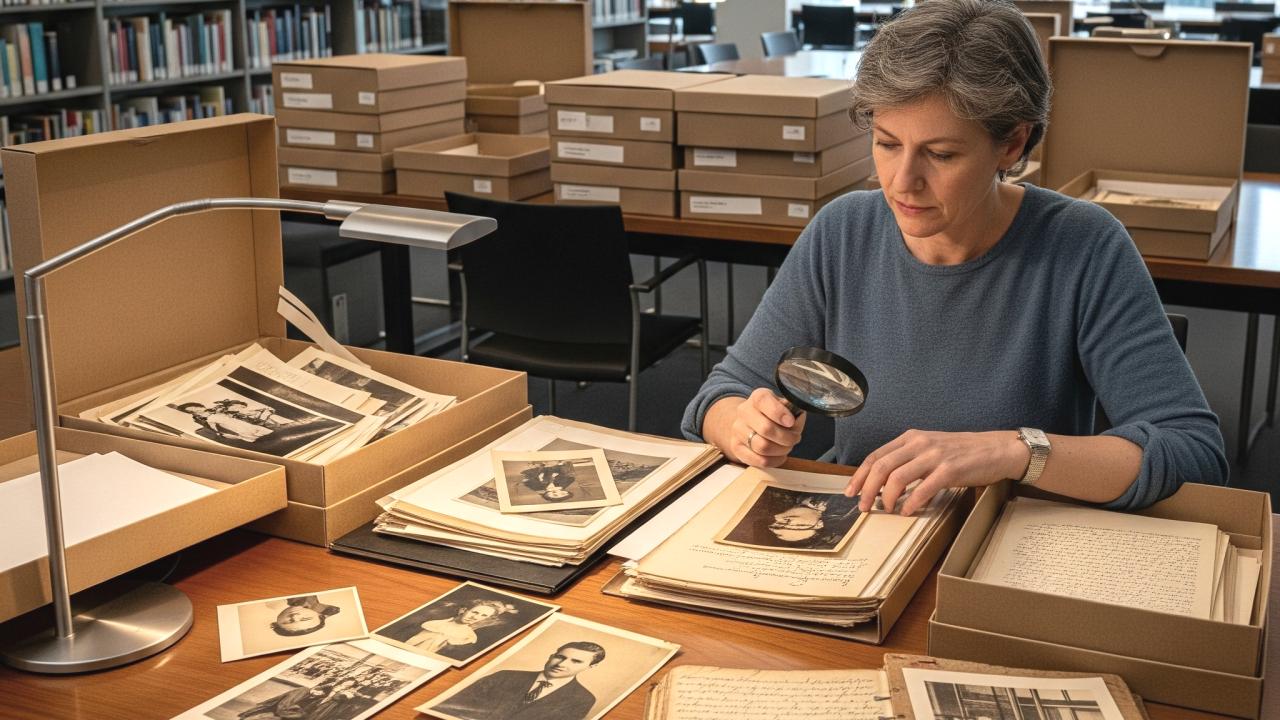

A message that has become a topic of discussion on social networks brings back to attention an essential question for contemporary society: does the school prepare the younger generations to analyze the world independently, or rather give them models of thought that they must accept?
(Staff: International / Education and Society)
In a world where information is circulating at an unprecedented speed, the ability to think independently becomes one of a person’s most important skills. We have access to news, documentaries, opinions, historical archives and millions of interpretations of reality. However, access to information does not automatically mean the ability to understand it.
An intervention published on social networks by the content creator “Thatskaizen” brings back a controversial issue: the difference between education that develops logical thinking and a system that, according to the author, rather encourages emotional expression and the acceptance of perspectives predetermined.
His message is challenging: the problem would not only be the way the news is presented, but also the way people are taught to interpret history.
Critical thinking should not be confused with the simple expression of an opinion
One of the central ideas of the message is that education should teach young people to think logically, not just to express their emotions.
The distinction is worth analyzing. Emotional expression is a normal component of human communication and is not, in itself, an obstacle to reasoning. The problem arises when the emotional reaction replaces the analysis, and a statement is accepted or rejected solely depending on the feelings it causes.
Critical thinking involves something else: checking information, identifying arguments, comparing perspectives, recognizing contradictions and the ability to admit that one’s own interpretation may be wrong.
A student should not only memorize the answers considered correct. He must understand why an answer is correct, what evidence supports it and under what conditions it can be contested.
History and responsibility to ask questions
The author of the message extends this criticism to how history is taught. His idea is that, before analyzing possible prejudices in the contemporary press, we should ask ourselves how neutral are the historical accounts we receive.
It is an observation that opens up an important topic. History is not only about stringing together dates and events. It involves documents, testimonies, interpretations, political and economic contexts, as well as confronting different perspectives.
Every society has the responsibility to present its past rigorously. But historical rigor does not mean that all interpretations are equally valid. Evidence, authentic documents and verifiable research remain essential.
Asking questions about a historical account is legitimate. To automatically reject a documented fact just because it does not correspond to personal beliefs, however, is not critical thinking.
Press, information and difference between fact and interpretation
The claim that news may be biased is not enough to demonstrate that all media outlets present reality in a manipulative manner. Instead, it can become a starting point for a necessary discussion about the responsibility of journalism.
A journalistic material must be evaluated through several criteria: information accuracy, transparency, identification of sources, verification of statements and delimitation of facts of opinions.
The reader, in turn, has a responsibility. It is not enough to follow a single publication or distribute information that confirms his own beliefs.
In a digital environment dominated by quick reactions, the ability to pause before distributing information can be as important as access to information itself.
From social networks to independent discussion communities
The creator of “Thatskaizen” also uses his message to present his own Substack platform, where he announces articles, overviews and materials that do not commonly appear in his social media publications.
It is a trend visible in the contemporary digital environment: content creators try to build their own publishing spaces, outside of short formats and algorithms that favor quick reactions.
These platforms can provide room for more extensive arguments and in-depth discussions. However, no independent publication should automatically be considered more objective just because it presents itself as an alternative to the traditional press. The same verification and transparency standards must be applied to all.
Conclusion – Freedom to think begins with the responsibility to verify
The discussion launched by “Thatskaizen” highlights a question that goes beyond the educational environment and reaches the center of public life: how prepared are we to differentiate the information from the interpretation and the argument from the emotional reaction?
Education, the press and history should not be seen as infallible authorities, but neither should they be rejected en masse. They must be evaluated, researched and discussed based on evidence.
A mature society is not one where all people think alike, but that in which people may disagree without renouncing logic, respect and responsibility to the truth.
Perhaps the real challenge for younger generations is not to learn to have an opinion about everything, but to learn how to reach a well-founded opinion.





Leave a Reply