
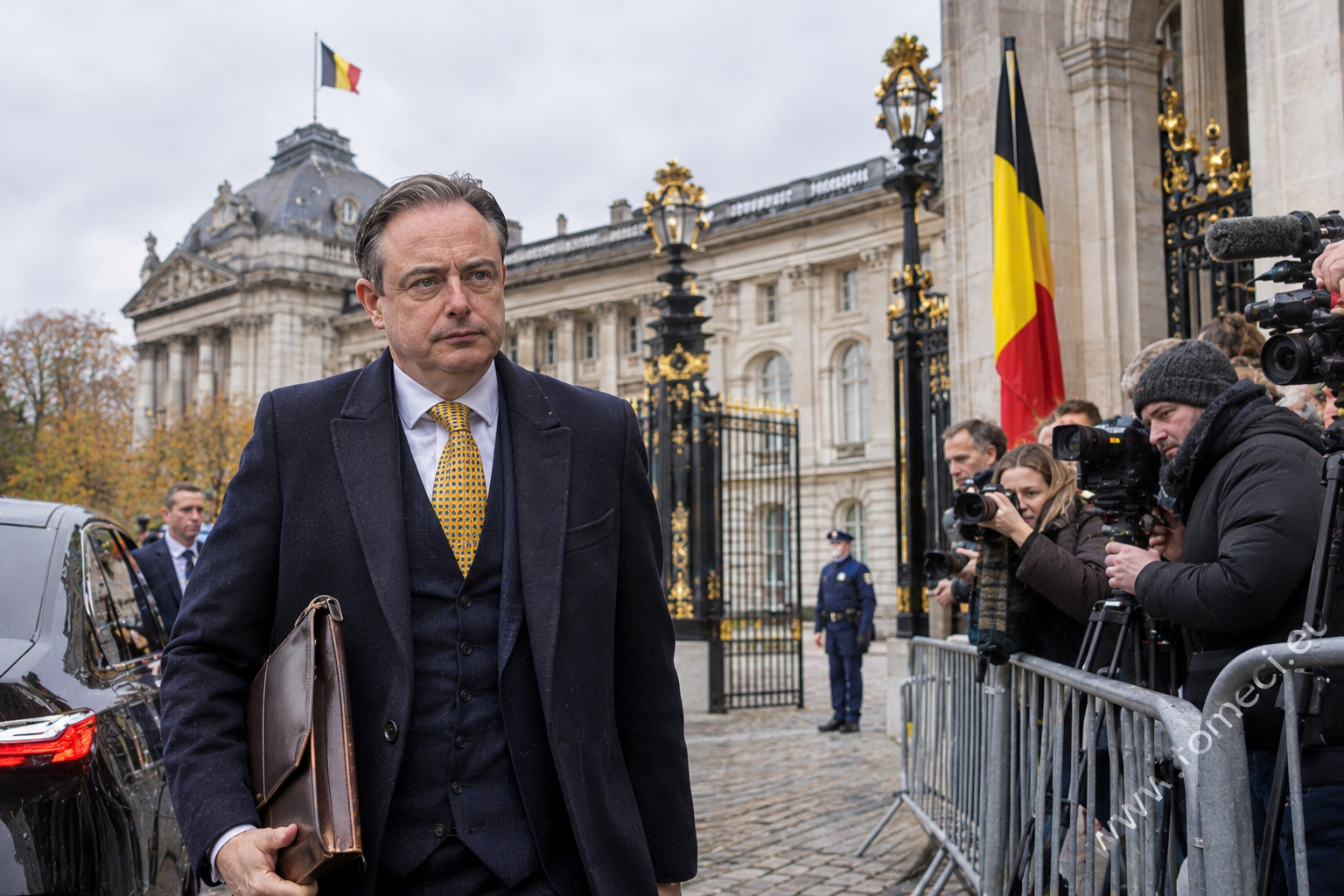
Negocierile dintre partidele coaliției au eșuat din nou. Premierul trebuie să găsească o soluție pentru bugetul anului 2027, în timp ce presiunea financiară și tensiunile politice cresc.

(Staff: The Weekend Magazine)
Belgium is facing a new stage of the budget crisis. On Monday, November 16, 2026, Prime Minister Bart de Wever met with King Philip after negotiations between the federal coalition parties ended without an agreement.
The monarch asked the prime minister to continue the discussions and gave him another week to try to overcome the deadlock. De Wever must return to the Royal Palace on November 23 to present the results of the negotiations.
Ten billion euros must be found by 2029
The federal government is trying to identify additional savings and revenues of around 10 billion euros by 2029 to reduce the budget deficit and stabilize public finances.
The dispute does not only concern the required amount, but especially how it must be obtained. Among the options discussed are the reduction of public spending, tax changes and additional contributions from people with high incomes and assets.
The situation is complicated by the Belgian budget deficit, estimated at approximately 5.2% of GDP, and by the increase in public debt, which exceeds 110% of GDP.
The coalition is divided
During the weekend negotiations, four of the coalition’s five parties accepted, in principle, the budget framework proposed by the prime minister.
The “vooruit” party (Flemish socialist), represented in negotiations by Deputy Prime Minister Frank Vandenbroucke, did not agree with the distribution of the financial effort.
Flemish socialists claim that people with important assets must contribute more and that the measures must not disproportionately press on the population, the health system and the beneficiaries of social benefits.
The other parties criticized the blocking of the negotiations, but Vooruit says that they do not refuse an agreement, but demand a fairer distribution of the sacrifices.
De Wever had already submitted his resignation
The current crisis has older roots. On November 2, Bart de Wever submitted his resignation to the king after the 2027 budget negotiations had reached an impasse.
On 6 November, King Philip refused to accept his resignation and asked the prime minister to continue the negotiations.
The new deadline, November 16, did not bring the expected result either. For now, De Wever remains in office, and the government continues to seek a compromise.
Vlaams Belang demands the removal of government
The blockage caused strong reactions in opposition. MEP and representative Vlaams Belang, Barbara Pas, harshly criticized the new postponement.
In the message published on Facebook, she claims that Flanders does not need new taxes and endless political compromises. His party intends to file a motion of distrust against the government in the House of Representatives.
The statement reflects the political position of Vlaams Belang. The submission of such a motion does not mean that the Government has fallen or that the Prime Minister’s resignation has been accepted.
What’s next for Belgium?
If a sufficiently fast agreement is not reached, Belgium risks starting 2027 with a provisional funding regime known as “two tents of provisional”. Basically, the public administration would operate monthly on the basis of part of the previous budget, instead of a new annual budget.
The stakes of the negotiations go beyond the dispute between the political parties. Decisions on savings and taxes can have effects on health, pensions, wage index and public services.
The next decisive moment will be November 23, 2026, when Bart de Wever must inform King Philip again.
Belgium has a week left to avoid aggravating a crisis that challenges not only the federal coalition, but also confidence in the country’s ability to manage its public finances.
The Weekend Magazine – A Tomeci Press Publication





Leave a Reply