
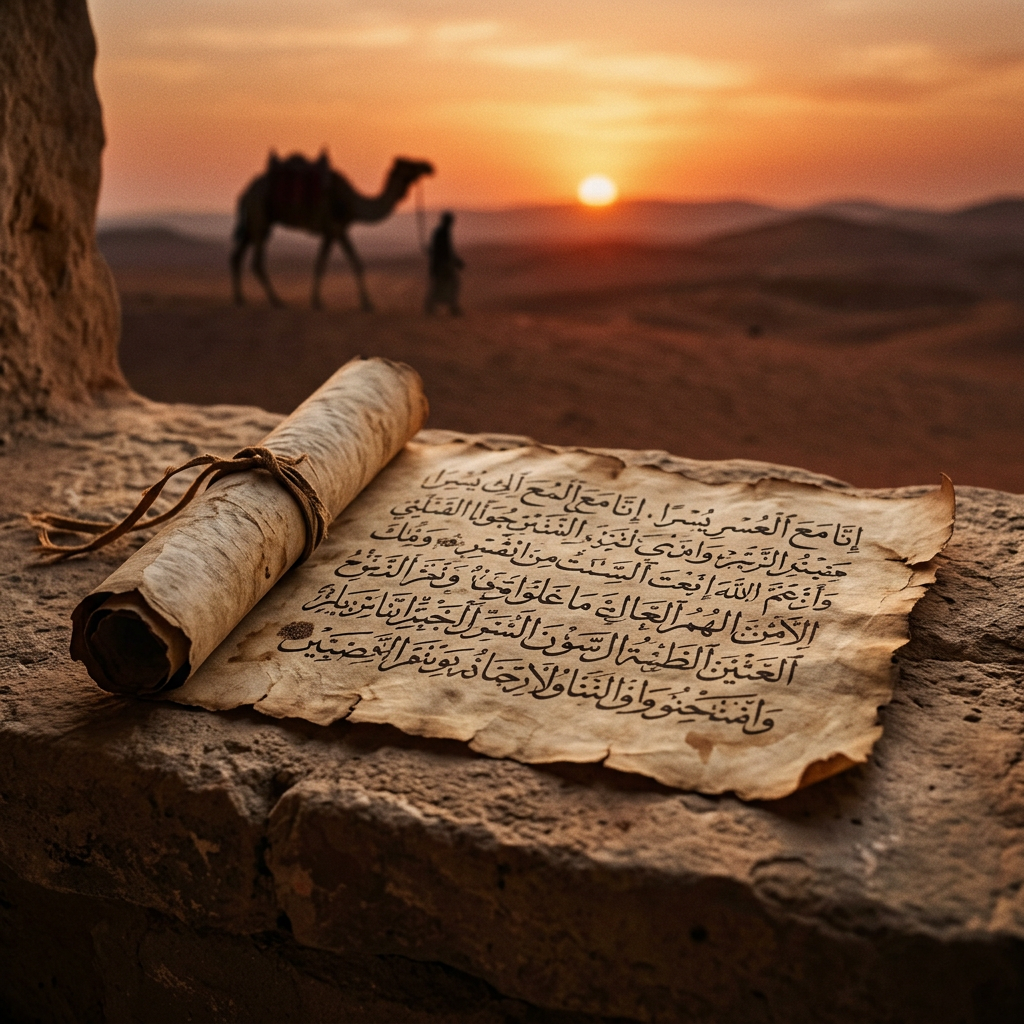
A controversial post on Platform X brought back to attention a 7th-century hadith that mentions the use of camel urine for medicinal purposes. Although the Internet reacts with disgust, the reality is much more complex: in certain regions, this traditional practice still exists, and the scientific community is divided between studies suggesting antibacterial properties and severe warnings about the risk of serious diseases.
(Staff: Global / Religion, Culture & Science)
The Internet is a space where ancient traditions and modern interpretations often collide with unexpected verbal violence. A recent post on Platform X, coming from a news account, triggered a storm of reactions. The message claimed, using a highly colloquial and challenging language, that the Prophet Muhammad would have told his followers in the 7th century that camel urine is healthy, and they would continue to consume it today.
For an uninformed eye, this statement seems taken from a foreign and ridiculous world. But beyond the sensationalism of social media, there is a historical, religious and scientific background that is worth carefully analyzing.
Historical origin: what do sacred texts say?
The statement is not an invention of the Internet. It has its roots in a hadith (an account of the sayings and deeds of the Prophet Muhammad) considered authentic in the Sunni Islamic tradition, especially in the collection Sahih al-Bukhari .
The story says that a group of people from another tribe came to Medina, fell ill, and were advised by the prophet to consume the milk and urine of the camels. According to the text, they were healed. It is important to emphasize that this is a specific episode, related to a medical context of the era, and not a general rule or a mandatory practice for all Muslims. The overwhelming majority of believers do not consume camel urine, considering it a marginal practice.
Practice in the modern world
However, in certain parts of the world, the practice survived in the form of traditional medicine. In regions of the Middle East, North Africa or South Asia, some Bedouins or practitioners of alternative medicine strongly believe in the curative properties of camel urine. It is sometimes used to treat digestive problems, skin diseases, or even as a cure for cancer. In some traditional markets, camel urine can even be marketed, although health authorities in major cities frequently discourage this practice.
What does modern science say?
This is where the fascinating and at the same time dangerous part comes into play. Over the years, there have been scientific studies – some of them funded even in Saudi Arabia – that have tried to analyze the composition of camel urine. Some lab research has suggested that it contains compounds with antimicrobial or anticancer properties. in vitro (in test tube).
However, the international medical community, including the World Health Organization (WHO), is extremely cautious. The consumption of camel urine presents real risks. Camels can be carriers of dangerous viruses, such as MERS-COV (Middle East Respiratory Syndrome), a disease that can be fatal for humans. Also, consuming unprocessed animal body fluids increases the risk of severe bacterial and zoonosis infections. Studies suggesting benefits are often isolated, have not been validated by large-scale clinical trials in humans and cannot equate to modern medical treatment.
Why does it cause such reactions?
Posting on social media uses trivial language to mock a belief and tradition. It exploits cultural differences to generate engagement (interactions) and indignation. In an era of polarization, such messages are designed to attract attention, stir up angry comments and fuel stereotypes.
On the other hand, the repulsion reactions of the Western public are natural from the perspective of modern hygiene. However, they ignore the context in which folk medicine appeared over 1,400 years ago, in a desert environment where resources were extremely limited, and people were trying to survive with what they had at hand.
Conclusion
The debate raised by this post is a perfect example of the clash between ancient texts, traditional medicine and 21st century science. Although the practice of camel urine still exists in certain communities and is mentioned in religious texts, it is not the norm for most Muslims. Moreover, from a modern medical perspective, the risks associated with viruses such as MERS far outweigh any unsafe benefit. It remains an inconvenient topic, which proves that, on the Internet, the line between information, ridicule and misinformation is more fragile than ever.




Leave a Reply