
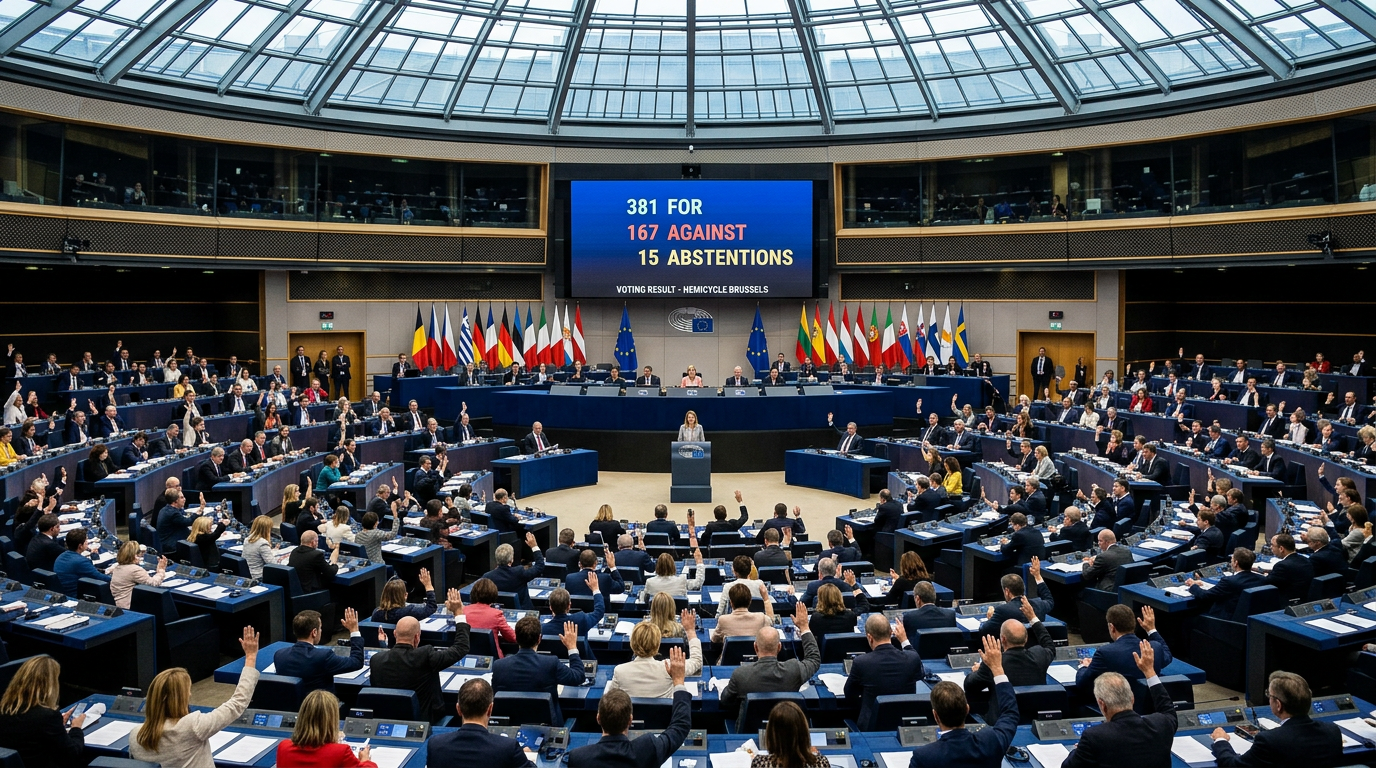

The non-binding resolution calls for a coordinated EU strategy, closer scrutiny of funding and an assessment of certain people or organisations for possible consideration under the EU terrorist-list framework. It does not itself ban the Muslim Brotherhood or automatically designate any organisation as terrorist.
(Staff: European Union / Politics & Society)
On 8 October 2026, the European Parliament adopted a resolution calling for a coordinated EU strategy to address what the text describes as “Islamist entryism” and the influence of networks linked to the Muslim Brotherhood. The vote was 381 in favour, 167 against and 15 abstentions.
What the resolution calls for
The text focuses on what it calls “Islamist entryism”—attempts by Islamist networks to build influence within political institutions, civil-society organisations and other established structures. It calls for:
- closer scrutiny of European funding;
- more systematic monitoring of associated networks;
- an assessment of certain individuals or organisations linked to the Muslim Brotherhood, to determine whether further action should be considered under the EU’s terrorist-list procedures.
What the resolution does not do
The resolution is political and non-binding. It does not ban the Muslim Brotherhood, nor does it automatically classify any organisation as terrorist. Any listing or restrictive measures would require separate action by the competent EU institutions under the applicable legal procedures.
Background on the Muslim Brotherhood
The Muslim Brotherhood was founded in Egypt in 1928 and later developed into a wider Islamist movement, with organisations and networks connected to it or sharing ideological links in several countries. The resolution calls for closer examination of relevant networks and their influence in Europe.
How the vote broke down
The resolution was adopted by 381 votes to 167, with 15 abstentions. The vote represents a political signal in favour of further EU-level scrutiny, but it does not create immediate legal consequences on its own.
What happens next?
The resolution calls for follow-up by the relevant EU institutions. Any concrete measures involving funding checks, network assessments or inclusion on the EU terrorist list would require further decisions and must follow the applicable legal framework.


Leave a Reply